-1.webp&w=3840&q=75)
On any trip to Cappadocia a balloon flight sits at the top of most lists; but having it on the list is one thing, and knowing the experience in all its aspects is another. In this article we gather everything you might want to know in one place: the history of ballooning, the technical detail, seasonal advice, what to wear, how to take photographs, booking tips and what the flight itself actually feels like. One article, a practical guide from start to finish.
As you read you will notice that although a balloon flight looks like a single activity, it is really made up of many small details coming together. The early preparation, the briefing, the inflation of the balloon, the flight itself and the champagne ceremony — each is a little story in its own right. Arriving with all of it understood multiplies the pleasure you take from the experience.
The History of the Hot Air Balloon: From 1783 to Cappadocia
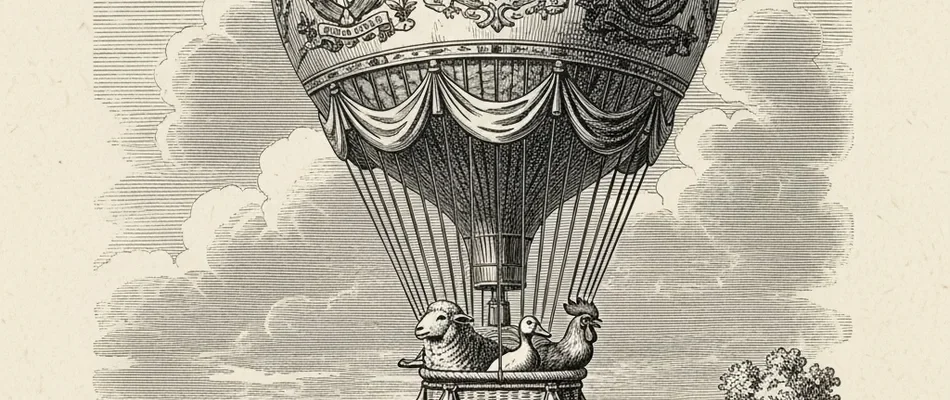
The modern hot air balloon was invented in 1783 by the French Montgolfier brothers. Its first flight carried a sheep, a duck and a rooster; a manned flight followed a few months later. Appearing at the beginning of the industrial revolution, the invention was initially used for spectacle and military reconnaissance; commercial tourist use came much later. Ballooning opened up in Cappadocia at the end of the 1990s.
Today Cappadocia has some of the heaviest balloon traffic in the world. Among the most popular ballooning centres across three different countries — Türkiye, New Zealand and Luxor in Egypt — Cappadocia ranks first. Around 25 licensed companies carry more than six hundred thousand passengers a year. The region's volcanic tuff landscape, its relatively calm morning wind profile and valleys that offer dramatic scenery within a short distance are the three main factors behind that popularity. Historically, an adventure that began with a sheep and a duck continuing above the fairy chimneys is a rather poetic development.
How Does a Balloon Work? The Physics Is Simple
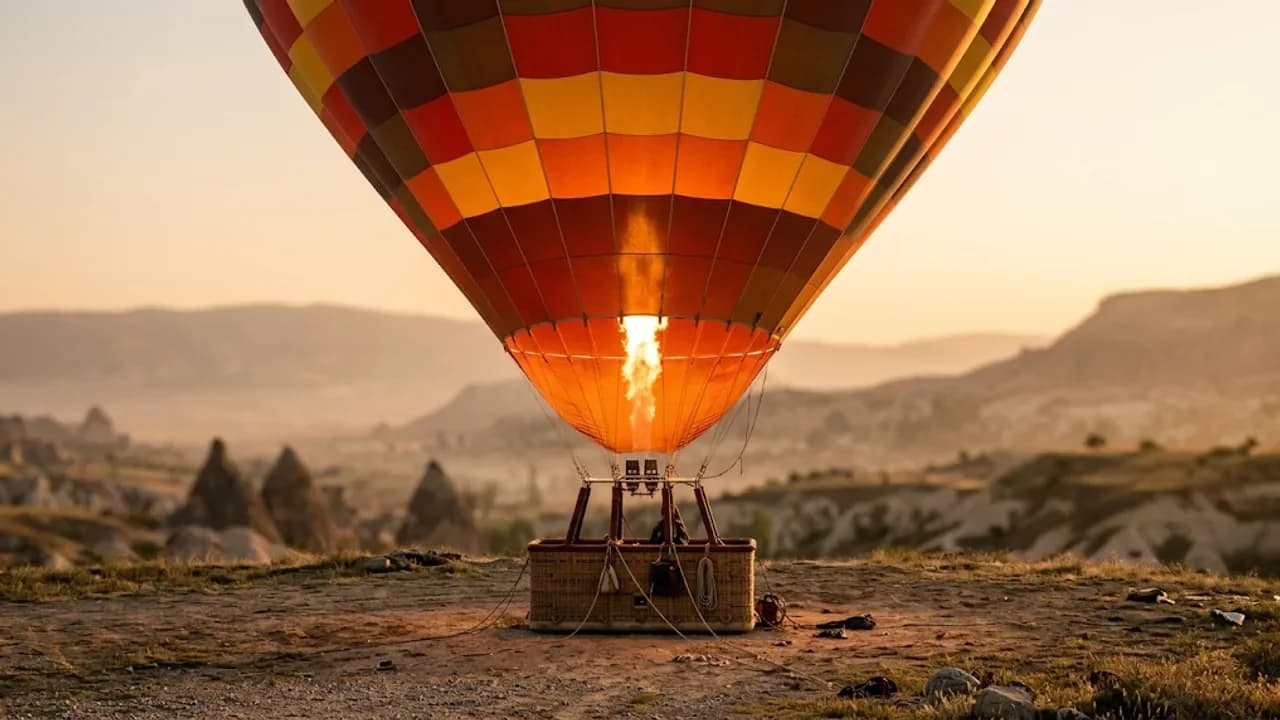
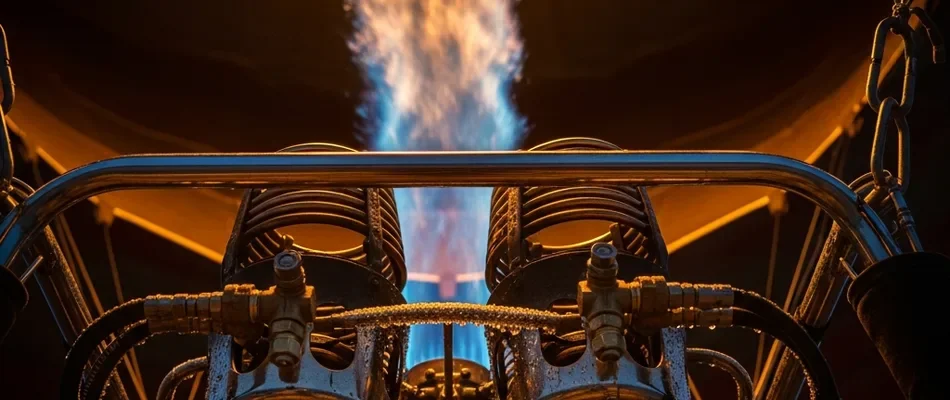
The principle is very simple: hot air is lighter than cold air. The burner ignites propane to heat the air inside the envelope to 80–100°C; because that hot air is lighter than the air outside, the envelope generates lift. As long as the lift exceeds gravity the balloon climbs; when they equalise it holds altitude; and it descends when a vent is opened to cool the air or let it escape.
A pilot cannot steer a balloon left or right like an aircraft; it moves with the wind. Directional control comes from using wind layers at different altitudes. The wind at ground level may blow one way while at 500 metres it blows another. By changing altitude the pilot moves into the layer they want and so directs the route. This is a subtlety learnt over years of experience. The same pilot can fly a completely different route over the same valley at different hours of the same morning, because the air layers are constantly changing.
Basket, Burner and Envelope: The Technical Anatomy
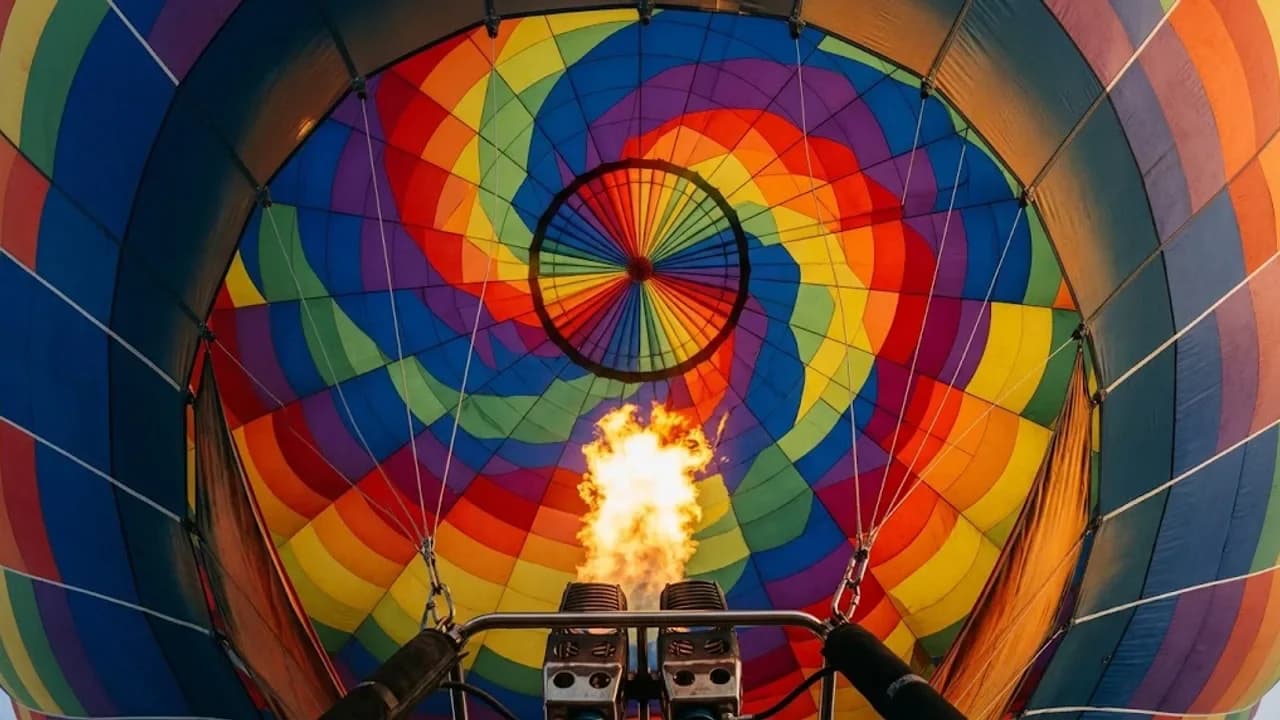
A Cappadocian balloon has three main parts. The first is the envelope: the large, colourful, dome-shaped fabric structure. It can stand 25 to 30 metres tall and is made from specially heat-resistant nylon or polyester. The second is the burner: the metal system beneath the envelope that burns propane to produce flame. Burner output is in the region of 18–25 million BTU per hour, which is a very high heat output. The third is the basket: the woven willow or rattan section where the passengers stand.
Basket capacity varies from 8 to 24 people. The common capacity in Cappadocia is 16 to 20; the basket is divided into compartments with four or five passengers in each. The pilot stands in the centre, directly beneath the burner. Each compartment has its own handles, a foot riser where fitted, and space to take up the landing position. The basket stands 1 to 1.2 metres high, so you climb onto a step to get in. There is a reason willow is chosen as the material: it flexes, absorbs the impact of a firm landing and does not break.
Why Flights Take Place So Early in the Morning
Balloon flights almost always happen in the morning, close to sunrise. That is not merely an aesthetic preference but a physical necessity. The early hours are when the atmosphere is calmest. The earth has cooled overnight, the air layers are stable and turbulence is at a minimum. Once the sun begins to climb, those layers warm, thermals form and the wind pattern becomes variable — conditions that turn risky for ballooning.
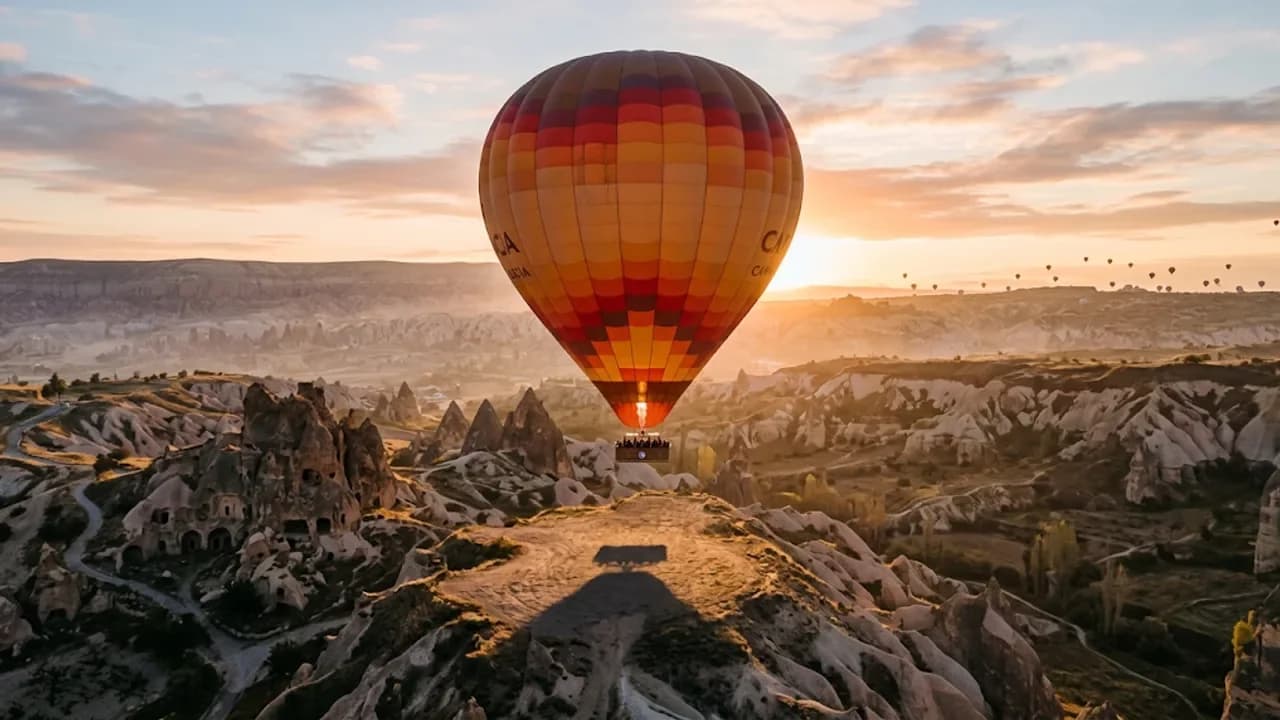
A typical start in Cappadocia is around 06:00 in summer and around 07:00 in winter. Flying after 09:00 is generally not safe, which is why the whole programme is compressed into the early morning. That necessity also coincides with the finest scenery: the pink and orange tones of sunrise cast long shadows across the valley and give the fairy chimneys a dramatic look. Physics and aesthetics walk hand in hand here — the only correct window is also the most beautiful one.
Launch Sites and Routes
Particular fields are used for launching in Cappadocia. The busiest are the flat areas around Göreme — Aktepe in particular, the ground near the Kılıçlar Valley, and the northern end of Kızılçukur. There are launch sites on the Avanos side as well. Which one you leave from is decided by the pilot on the morning itself, according to wind direction and speed. The ground crew transports the balloon to that field, and inflation begins there.
The route depends on the wind too. With a north–south wind you may leave Göreme and head towards Uçhisar or Avanos. With an east–west wind you might pass over Kızılçukur or the Love Valley. The pilot describes which valley you are flying over on the microphone, names the formations you pass and lets you know when it is time to take photographs. What you see below is different every morning; even the same pilot very rarely flies the same route two days running.
What to Wear: A List by Season
Choosing the right clothing matters a great deal for comfort. Even in summer, Cappadocia is cold in the early hours — while under the burner as the balloon lifts off it is hot. Dressing in layers is therefore the basic rule. A breathable t-shirt underneath, a thin shirt or tee over it, and a light jacket on top: three layers you can put on and take off adapt easily to the changing temperature.
In winter that layering needs to be heavier: thermal base layers, a wool jumper, a thick coat, gloves, a scarf and a hat. There is no way to warm up inside the basket; the burner gives off heat, but the sides and the floor stay cold. Footwear matters too: closed, sturdy, outdoor-type shoes all year round. Sandals, flip-flops and heels are all out. If your hair is long it is worth tying it back, as the heat from the burner flame above can reach the ends. If you want a hat, a baseball cap is best — but hold it in your hand during take-off and landing, or it will fly away.
Photography Tips: How to Get the Best Shots
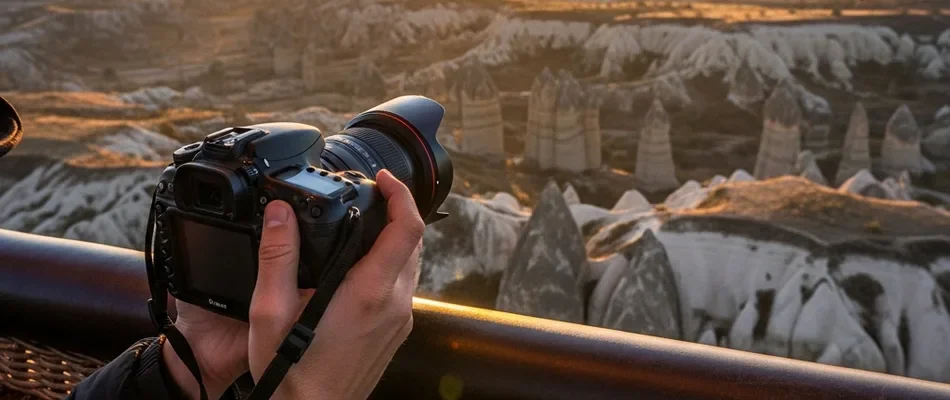
For many visitors the photography is half the experience. A few practical suggestions for good frames. First: make sure your battery is fully charged, as cold air drains it quickly, and carry a spare. Second: if you are using a phone, put a wrist strap on it without fail; dropping a phone while leaning over the edge of the basket is a common nightmare.
The best shots are generally taken in the first fifteen minutes of sunrise. Composing slightly to one side rather than straight into the sun makes the silhouettes of the balloons more dramatic. Including other balloons works well: ten balloons in the air together make a far more cinematic composition than one alone. Use the valley formations below as reference points; focusing on the sky alone gives a photograph no depth. Use a wide-angle lens if you have one; if you are shooting on a phone, the 0.5x ultra-wide mode gives the best result in most scenes.
The Champagne Ceremony: A Ballooning Tradition
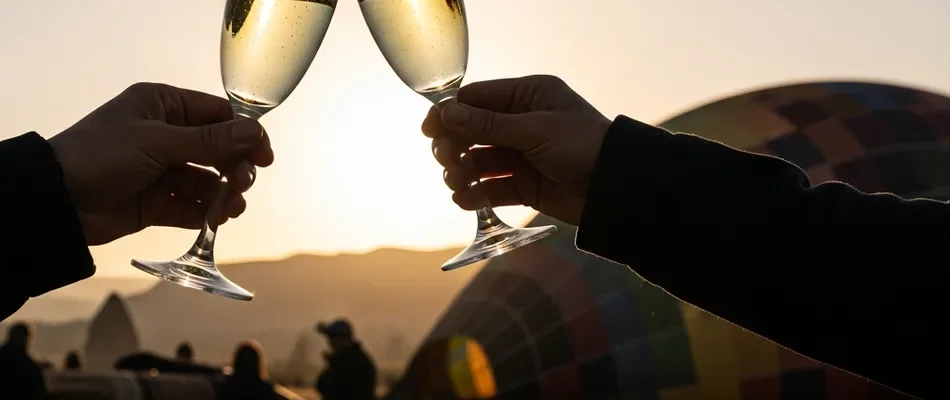
Once the landing is complete, the unchanging tradition of ballooning begins: the champagne ceremony. It dates back to eighteenth-century France. When the first balloon flights took place, villagers would panic as a balloon came down, thinking the devil was landing. To smooth things over, pilots carried champagne with them and offered it to the villagers. That gesture of courtesy became a ritual over time.
Today in Cappadocia, after landing, the pilot says a few words, tells the story of the tradition, hands out your certificate and offers champagne or fruit juice to everyone. The passengers raise a glass together, photographs are taken and there is a short celebration. The ceremony lasts 15 to 20 minutes, during which the balloon is packed away. That the same tradition continues two hundred years after the first flight says something about the particular character of the ballooning world.
Booking: When, and With Whom?
Booking timing depends on the season. At the summer peak, July and August, we recommend booking at least two months ahead, as most operators fill up. Out of season, from November to February, you can find a place even one or two weeks in advance. Generally, the earlier you book the better your chance of a cheaper ticket, and many operators offer an early booking discount.
On which operator to choose, the point to watch is the licence. Companies with a valid civil aviation licence display that information on their official website, and you can also simply ask. The second criterion is pilot experience; it is useful to know the average flying hours of the pilots a company works with. The third is genuine user reviews — looking at third-party platforms rather than the company's own page gives a fuller picture. Remember that unusually low prices are a warning sign: there is a floor to average Cappadocia balloon flight prices, and it is worth asking how an offer below it is possible.
After the Flight: Completing the Morning
This comprehensive guide has brought together every detail you need to prepare for the experience. From its history to its technical anatomy, from clothing advice to photography tips, from the champagne tradition to booking timing — with all the pieces in place, it becomes clear why an experience that begins in the very early morning and ends with a raised glass is so special. Do it once and it stays with you; many passengers still remember a balloon flight years later as the brightest memory of the holiday.
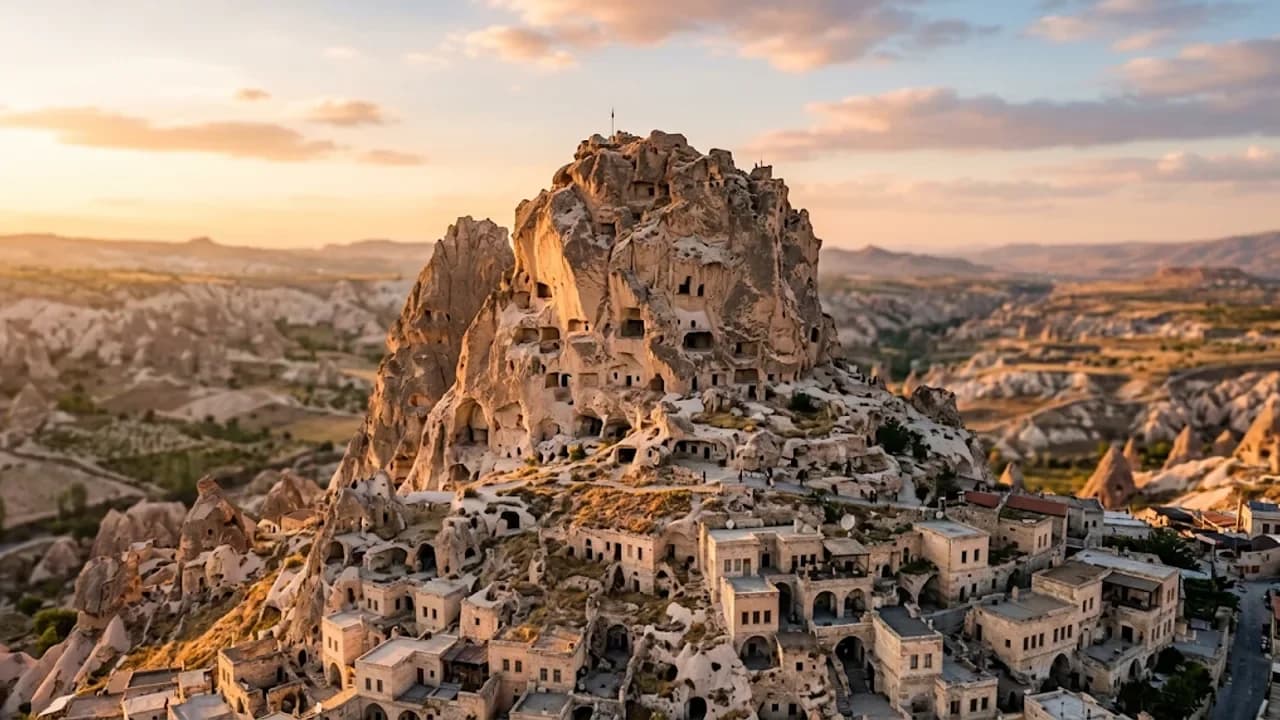
When the flight ends around 09:00, there is one more tradition to complete it: a generous breakfast. KMU Mehmet Usta, at the summit of Uçhisar and close to the balloon landing areas, ties the balloon morning gently back to earth with a traditional Turkish breakfast spread. Hot tea, fresh bread, kuru kaymak and regional preserves in the shade of the volcanic rocks, with the valley panorama in front of you, make an elegant continuation of the flight's poetry. You will be glad you woke up in Cappadocia this morning; the balloon, and what follows it, lives a long time in the memory.