-1.webp&w=3840&q=75)
Shaped by volcanic rock over millions of years, Cappadocia is one of Türkiye's most captivating destinations. Extending across the provinces of Nevşehir, Aksaray, Niğde, Kayseri and Kırşehir, this landscape has earned its place on the UNESCO World Heritage List with its fairy chimneys, underground cities and rock-cut churches. Millions of visitors come to this mystical region every year to spend time here.
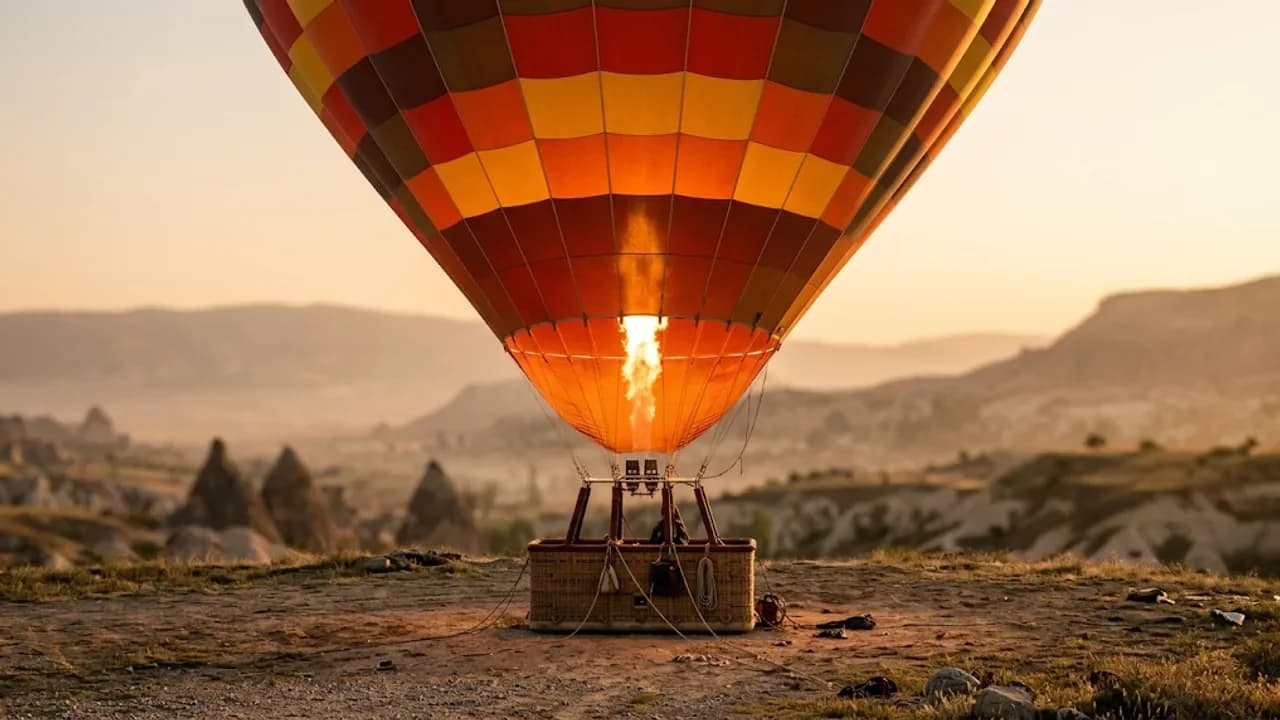
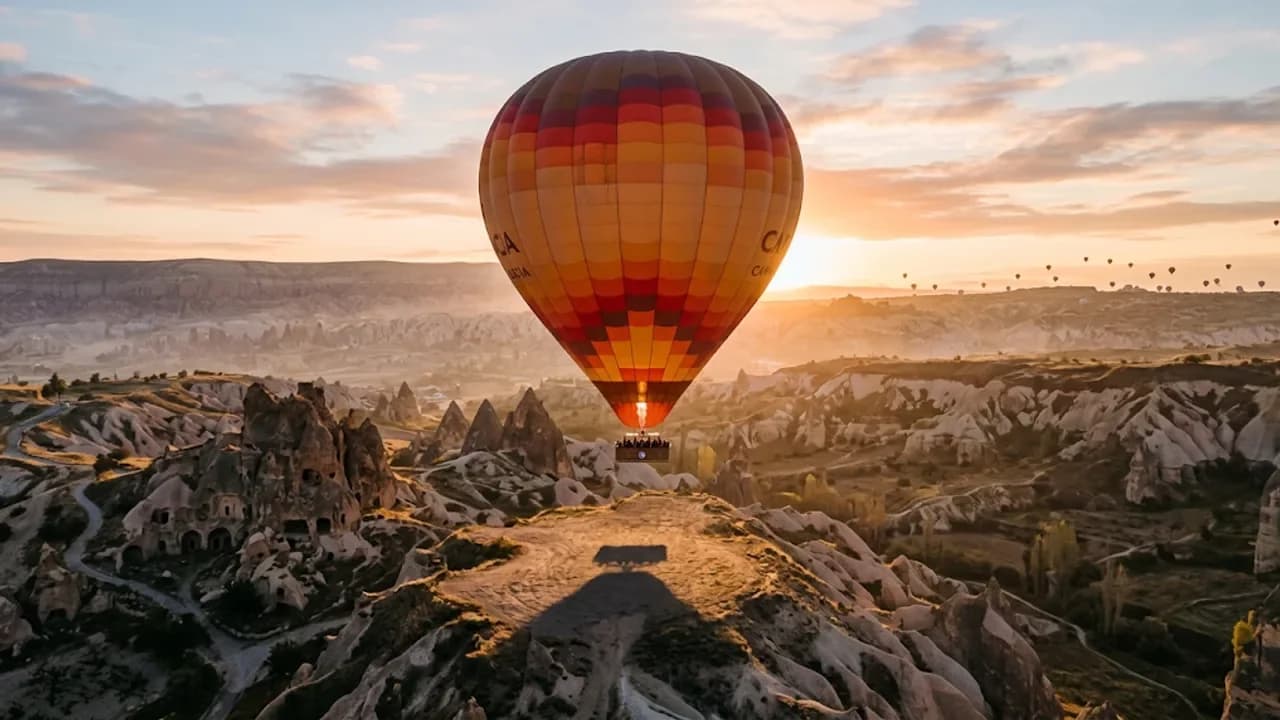
A list of places to visit in Cappadocia can run very long, because the region is remarkably rich in things to see. Balloon flights in the early morning, walking routes through the valleys and the historic buildings each offer a different kind of experience. Alongside the frescoes of the Göreme Open Air Museum, the voice of history can be heard on the stairways descending into the depths of Derinkuyu. Towns such as Ürgüp, Avanos and Uçhisar, meanwhile, stand out for the way their atmosphere blends modern life with the past.
Places to Visit in Avanos
Avanos is a district of Nevşehir lying in the north of Cappadocia. Split down the middle by the Kızılırmak river, this charming town is famous for a pottery tradition thousands of years old. Known as Venassa in Assyrian times, Zu-Vinessa under the Hittites and Vanote in the Byzantine period, the settlement took the name of the Seljuk commander Evranos Bey and then assumed its present form during the Ottoman era.
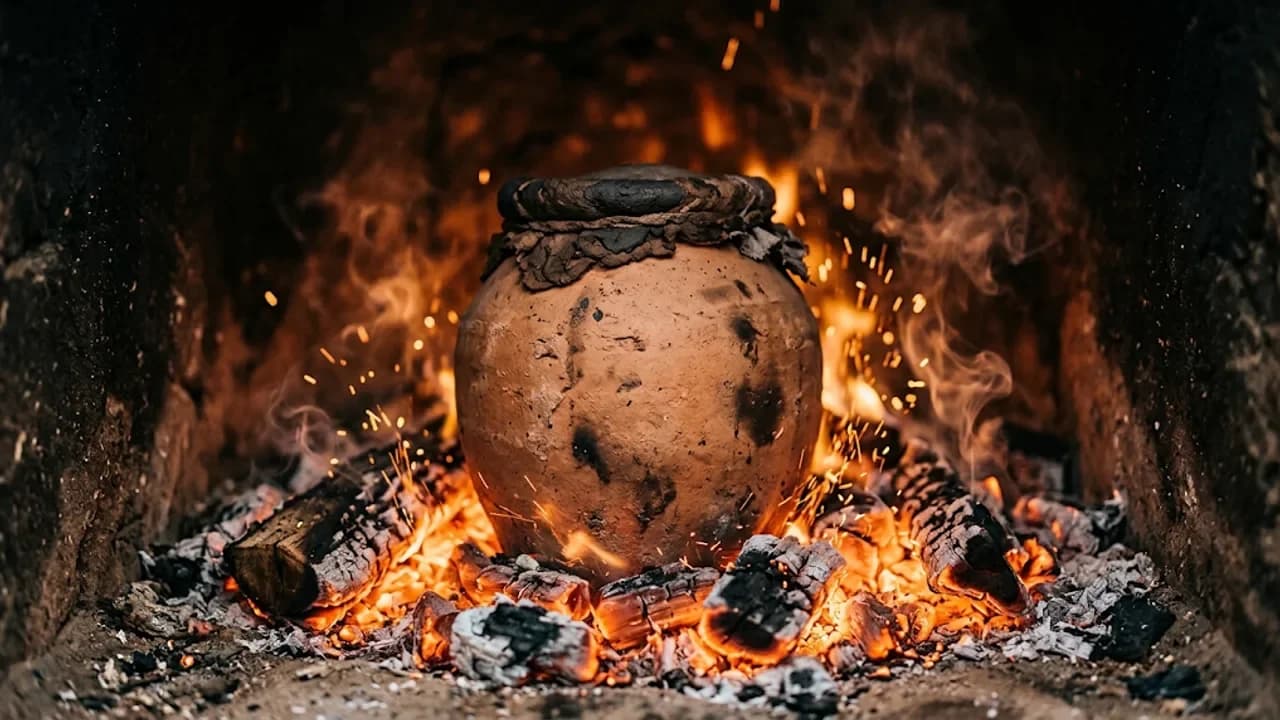
What makes Avanos special above all is that Anatolia's longest river, the Kızılırmak, runs right through the middle of it. Thanks to the red clay the river carries, the area made its name in pottery. There are workshops on every corner of the town, where masters shape pots and bowls using techniques passed down over centuries. Many workshops open their doors to visitors, and some even offer the chance to sit down at the wheel yourself.
The old Avanos houses along the banks of the Kızılırmak catch the eye with their stonework. Walking their narrow streets, you feel how time slows down. There are cafés and restaurants by the river; in the evening this becomes the meeting point for local people. The Güzelöz Church is one of the buildings reflecting the town's historic fabric. There are also several underground cities around Avanos; because they are not as busy as the great underground cities, they make for a quieter exploration.
Devrent Valley

Devrent Valley is also known as the Valley of Imagination, and not without reason. The fairy chimneys here have taken such curious shapes that you can see a different animal or object in each one. The most famous is the camel-shaped rock, which appears constantly in Cappadocia promotional films and television series. Having become so well known, it has been fenced off to protect it from damage. You can still photograph it from a distance.
The other valleys of Cappadocia have their own beauty too, but what sets Devrent apart is the way the rocks set the imagination going. One person sees a camel, another a tortoise, another a fish. As you walk through the valley, remarks along the lines of "that one looks like this, and that one looks like that" become almost unavoidable. Children particularly enjoy it here, because it is like a natural sculpture garden.
At Devrent you may also come across real camels brought by villagers. For a fee you can pose on a camel for a souvenir photograph. Those who would rather not ride can stand beside one and take a few frames. Entry to the valley is free and it is generally not crowded, so you can wander at your leisure.
Getting from Avanos to Devrent Valley takes 10 to 15 minutes, but as there is no public transport you will need your own vehicle or a taxi. If you join a Cappadocia tour it is included in the programme anyway. For those exploring independently, it makes sense to stop by while driving through from Göreme or Ürgüp. The valley is not large and can be seen within half an hour, though the time you set aside for the views and for photography will vary. Go towards sunset and the play of light gives the rocks an entirely different character.
The Hair Museum

The Hair Museum has been included by Guinness in its list of the world's strangest museums, and with good reason. It sits in a corner of Chez Galip's pottery shop in the Potters' Bazaar in Avanos. Walk in and you are met by more than 16,000 locks of hair covering the ceiling and the walls. It may feel a little odd at first, but once you learn the story you see it differently.
The museum's origins are rather romantic. As Galip Bey's French girlfriend was returning to her own country, she cut a lock of her hair as a keepsake and hung it on the wall of the shop. Over time, visitors who came here began doing the same. Across the years the shop turned into something like an archive of hair. People still come and leave a piece of their hair today; some purely as a memento, others in order to enter the draw.
Yes — the museum holds a draw twice a year. Those who wish to take part hang a slip of paper with their contact details along with their hair. The lucky ones are invited back to Cappadocia with the cost of a week's holiday covered. Not a bad deal.
Photography inside the museum is not allowed, however. The reason is a rather sad one: in the past some people used photography as a pretext to take the contact details from the walls and then began pestering those concerned. Following complaints, a case was brought against Galip Bey and a photography ban was the result. Everyone's privacy matters.
The museum is open every day of the week from 08:00 in the morning until 19:30 in the evening. Entry is free; since it is bound up with the pottery workshop, you will naturally look in as you go round. If you are stopping in Avanos, it is worth setting aside a few minutes to see this curious place. Perhaps you will leave a lock of your own hair and try your luck in the draw.
Zelve Open Air Museum
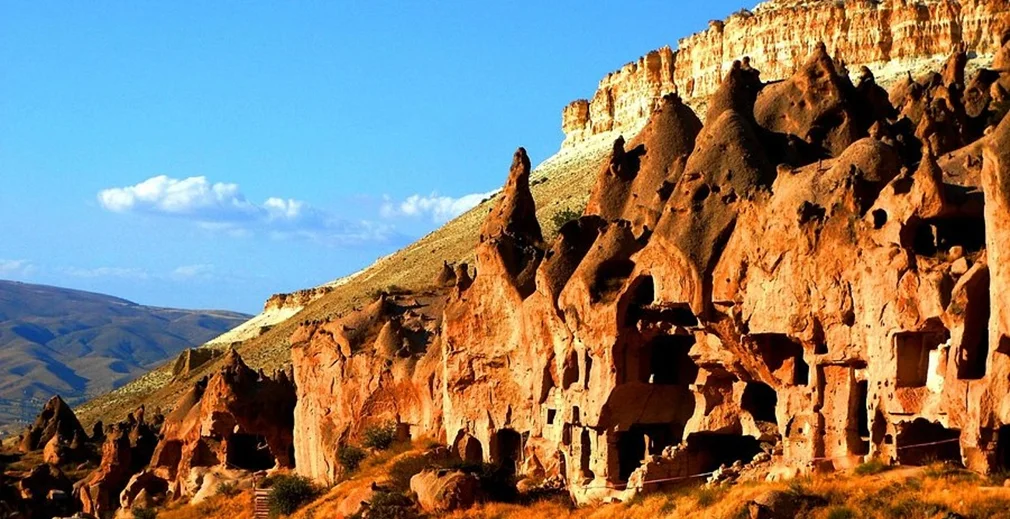
The Zelve Open Air Museum is one of the most impressive spots in Cappadocia. It stands out not only for its natural beauty but for its historical and cultural depth. In this area, where two communities of different faiths lived side by side for centuries, churches and mosques were built next to one another. Muslims and Christians raised their places of worship in the same valley, in the same period, and showed respect for one another. Seeing that climate of tolerance is one of the most meaningful aspects of a visit to Zelve.
The ruins of Zelve are among the places where fairy chimneys are found at their densest and most beautiful. The houses, churches, tunnels and passages carved into the rock form a labyrinth. Some structures are remarkably well preserved, while others carry the marks of time. Walking through, you feel as though you are moving inside history. Exploring the valley you may have to make your way through narrow passages and up rock cut like stairs, so comfortable shoes are essential.
Anyone who enjoys walking in nature will find an excellent route at Zelve. There are paths within the valley and you can wander as long as you like. Those who would rather not walk can join one of the safari tours run in the area; ATV or jeep tours let you see the valley from different angles.
One important detail: Zelve and the Paşabağı Valley are covered by the same ticket. So you can buy one ticket and visit both places. The Museum Pass is valid as well, so use it if you have one. The museum is generally less crowded in the morning; going early both makes for a more relaxed visit and means photographing at hours when the sun is not harsh. Zelve should be one of the places you stop on any Cappadocia trip. History enthusiasts and lovers of nature alike come away satisfied.
The Underground Ceramics Museum — Güray Museum

The Güray Museum has the distinction of being the world's first and only underground ceramics museum. It presents the ceramic and pottery tradition of Avanos in a modern interpretation. The museum is set inside a rock-cut structure, so as you go round you can see both the historic fabric and the works of art together. It has combined the natural architecture of Cappadocia with the museum concept, and the result is a genuinely striking space.
The museum displays work by ceramic artists trained in Türkiye who are recognised internationally. There is a wide range, from classical pots and bowls to contemporary ceramic sculpture. Small archaeological finds recovered from the region also form part of the collection. Examining ceramic and pottery fragments from the Roman, Byzantine, Seljuk and Ottoman periods, you gain a sense of the ceramic history of Anatolia.
One of the most engaging aspects of the Güray Museum is its live workshops. There are working areas for artists inside the museum and you have the chance to watch them producing work. You can see clay taking shape on the wheel and turning into a bowl, a plate or a vase. Some workshops also offer visitors an interactive experience; you can play with the clay and make a small piece of your own.
Although the museum is designed in a modern spirit, it has not lost the soul of Cappadocia. The cool air of the underground space, its silence and its natural lighting bring the works out all the more. If you have come to Avanos, it is worth seeing not only the traditional pottery workshops but the Güray Museum too. It is an ideal stop both for art lovers and for anyone curious about history. The museum is generally not crowded, which means the chance to look round in a calm setting.
Places to Visit in Çavuşin
Çavuşin Old Mosque

Çavuşin is a small settlement lying between Göreme and Avanos. Being only two kilometres from Göreme, anyone passing that way generally stops here as well. It is known as one of the oldest settlements in Cappadocia and draws attention for its historic fabric. The Old Mosque in the centre of the village is an important part of that historic atmosphere.
The Çavuşin Old Mosque carries the architectural features of the Seljuk period. Its minaret was built in the typical Seljuk style and it serves as the village's working place of worship. The mosque stood idle for a time after the village was evacuated following a major landslide in the area in 1958. In that period the mosque, along with many houses and other buildings, was left unusable. After years of neglect it underwent a comprehensive restoration in 2011 and was reopened for worship.
During the restoration an effort was made to preserve the mosque's original architecture. The stonework and the details of the minaret reflect Seljuk craftsmanship. The interior is plain but has a peaceful atmosphere. Villagers come to the mosque regularly, which shows that the building is not merely a tourist site. Around the mosque lie the ruins of old Çavuşin, where houses and structures carved into the rock can still be seen. The area is ideal for photography too, with historic fabric and natural landscape side by side.
Walking through Çavuşin you have to pass by the mosque. If the door is open you can go in and take a look for a few minutes, though it is worth being mindful at prayer times. The village is small and easily covered on foot. It is well worth stopping in this little village on the way from Göreme to Avanos.
Monks Valley (Paşabağı)
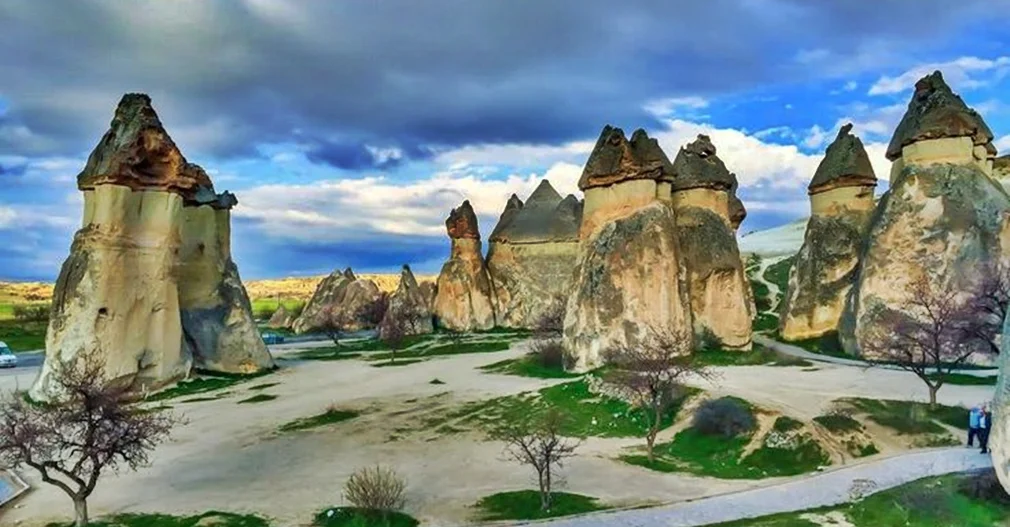
Paşabağı, or Monks Valley, is one of the places where Cappadocia's most curious fairy chimneys are found. In the Byzantine period monks who chose a hermit's life lived in seclusion here. The valley is famous above all for its mushroom-capped fairy chimneys, and traces of life can still be seen inside some of these rocks. Chapels, cells and passageways lay bare the kind of life the people of that period led.
One of the most important structures in the valley is the chapel built in the name of Saint Simeon. Saint Simeon was a hermit who lived near Aleppo in the fifth century. Once people came to believe that he worked miracles, they began to flock to him. To escape that attention he climbed onto a pillar and went on living there, coming down only to take the food and drink brought to him. The chapel at Paşabağı was built in memory of this monk who adopted such an extraordinary way of life.
You come across churches and chapels carved into the fairy chimneys everywhere in the valley. Some have to be reached by climbing, while others can be entered directly. Inside, remnants of frescoes and traces of living quarters can be seen. A Greek community also lived in this area until the population exchange, so strong traces of Christian culture remain in the valley.
Another thing that strikes you as you wander around Paşabağı is the shape of the fairy chimneys. These formations, resembling double or triple-headed mushrooms, really are enchanting. The rocks take on different tones according to the angle of the sun, which creates a wonderful setting for photography.
An important reminder: Paşabağı and the Zelve Open Air Museum are covered by the same ticket. If you plan to see both, keep hold of your ticket. Paşabağı is very close to Çavuşin and can be reached on foot. The valley is not large but it is worth spending time in. Going early in the morning or towards evening both avoids the crowds and catches finer light.
Rose Valley (Güllüdere)

Rose Valley is one of the finest routes in Cappadocia for anyone wanting to walk in nature. Extending between the village of Çavuşin and Göreme, the valley is full of hermit cells and churches carved into the rock. It draws attention as much for its natural beauty as for its historic fabric. There is a trekking route roughly four kilometres long within the valley, taking about an hour on average. The pace is up to you; stop for photographs or look round the buildings and it can take longer.
Rose Valley in fact divides into four main sections: Güllüdere 1, Güllüdere 2, Kızılçukur and Meskendir Valley. Each has its own character. Enter from Çavuşin and you proceed in that order; start from Göreme and the route runs in reverse. Whichever end you begin from, the scenery is magnificent.
The Meskendir Valley section is especially well liked. Here the rock-cut structures are denser and better preserved. With old church remains, tunnels and passages, you keep finding something new as you explore the valley. Some churches can be entered, while others have worn away over time. Even so, they are impressive from the outside.
Walking along the valley, the changing colour of the surrounding rock catches the eye. Close to sunset in particular the rocks take on pink and orange tones, which explains where the name Güllüdere — rose valley — comes from. The early morning hours are lovely as well, but the sunset here is genuinely enchanting.
Comfortable shoes are essential for the walk, as the ground is stony and uneven in places. Carrying water and a small snack is also advisable. There are shaded areas within the valley, but it can be hot in summer. Do not hurry as you go through Rose Valley; around every corner the view offers a different surprise. With nature and history together, walkers and those interested in culture alike come away satisfied.
Kızılçukur Valley

Kızılçukur Valley is one of the most popular spots in Cappadocia for watching the sunset. The reddish tone the rocks take on as the sun goes down is the feature that gives the valley its name. It can be quite crowded in the evening, as visitors from Türkiye and abroad alike come so as not to miss the sunset. The view really does justify it; it is an ideal place for anyone wanting to take photographs.
The churches at Kızılçukur are among the oldest religious buildings in the region. Carved into the rock, they carry frescoes and architectural details surviving from the Byzantine period. Some can be entered, while others have been closed for safety reasons. Even so, the depth of history can be felt from the outside.
If you come on a jeep or ATV safari tour, you do not need to pay separately to enter the valley. But note: with those vehicles you can only go as far as the area with the viewing terrace. ATVs, jeeps, motorcycles and horses cannot enter the valley itself. It can only be descended on foot or by bicycle. As the paths are narrow and stony in places, cycling can be a little risky; if you are not experienced, walking is the better choice.
Those who would rather not walk alone can make use of the guided tour options. Guides both show the route and provide information about the history of the area. Going with a small group or on a private tour is more comfortable than a large group tour.
It matters to reach Kızılçukur before sunset, because finding a good spot can become difficult. We recommend getting up to the viewing terrace at least half an hour beforehand. As the sun sets the colour of the rocks changes minute by minute; watching that transition is an enchanting experience. Taking water and a light jacket is advisable, as the evening cools down. Kızılçukur is worth coming to Cappadocia for even just for the sunset.
Çavuşin Church
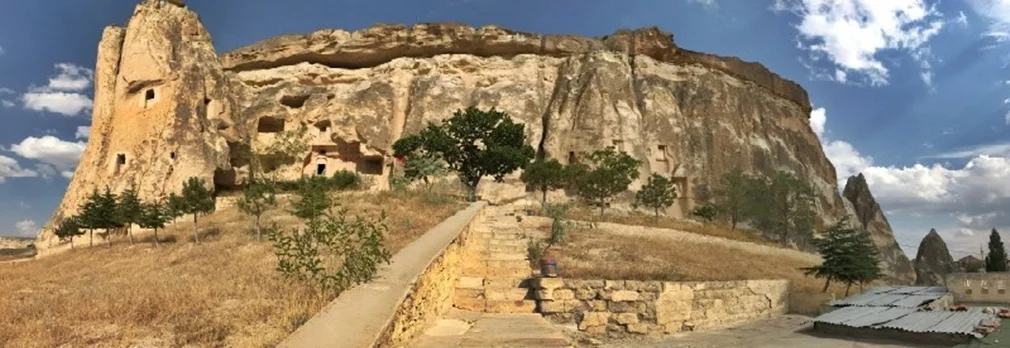
Çavuşin Church is known as one of the most important religious buildings in the region. With a single-nave, three-apse plan, the church holds some of the finest examples of early Christian art. It is particularly valuable in terms of icon painting; specialists say the frescoes here are among the highest-quality icon work of early Christianity. The colours and the detail remain striking even centuries later.
The narthex section of the church has unfortunately collapsed. Over time, erosion of the rock and environmental factors have damaged parts of the structure. Even so, the main space and the apses can still be seen. The fresco work inside reflects the religious belief and the artistic understanding of the period. Figures of saints, scenes from the Bible and decorative work can still be made out on the walls.
The way up to the church is somewhat demanding. You have to climb stairways and passages carved into the rock, which can be risky for older visitors and for children. The ground can be slippery; care is essential while climbing. Wearing sturdy shoes and moving slowly is advisable. For anyone with balance problems or uneasy with heights, attempting the entrance is unlikely to be the sensible choice.
An important note: as of October 2021 the church is closed to visitors. Such a decision may have been taken for safety reasons or because of restoration work. It is advisable to check the current position before going. Even if it is open, there may be an entrance fee; it is worth finding that out too. Even with the church closed, the village of Çavuşin and the other structures around it are worth a visit.
Church of St John the Baptist

The Church of St John the Baptist is the only building in the Çavuşin area that is clearly identifiable as a church. Seen from outside, its rock-cut entrance is easily made out. Behind the entrance lies a three-nave basilica dedicated to St John the Baptist. The building carries the typical features of early Christian architecture and was one of the important religious centres of its day.
The frescoes inside the basilica are unfortunately in poor condition. Over the centuries damp, weather conditions and human interference have seriously damaged them. The front façade has also collapsed through erosion, so it is not possible to see the building in its original form. Even so, the sections still standing give clues as to how magnificent the church once was.
In the Byzantine period the Church of St John the Baptist was a place where relics belonging to Saint Hieron were kept. That shows the church to have been an important place of pilgrimage not only locally but regionally. Pilgrims coming here in that period travelled long distances to visit the relics and to pray.
There is one matter to note when visiting the church: photography with flash is prohibited. Flash damages the surviving frescoes and paintwork, so the rule exists for conservation reasons. You can photograph without flash, though as the interior may be dark the pictures may not come out sharp. With its historic fabric and religious importance, the church is among the significant stops in Çavuşin. Calling in here while walking between Göreme and Paşabağı means bearing witness to the rich Christian past of the region.
Places to Visit in Göreme
Göreme is a township attached to the central district of Nevşehir. It does not have district status like Ürgüp or Avanos, but it is regarded as the heart of the Cappadocia experience. From the fourth to the thirteenth century AD this was a place where monastic life was lived intensely. In those years the monks and hermits drawn to the region created monastery complexes inside the rock. Every corner you walk through today bears witness to the religious life of that period.
Cappadocia's densest concentration of cave hotels and restaurants is in Göreme. Looking out of the window in the early morning and seeing the sky fill with colourful balloons is one of the great advantages of staying here. Göreme overlooks the valleys from which those famous hot air balloons take off. Even if you do not join a balloon flight, watching this scene from a balcony or a terraced café is an unforgettable experience in itself.
Another advantage of Göreme is that it sits right in the middle of Cappadocia. From here you can easily reach important sites such as the Göreme Open Air Museum, Uçhisar, Çavuşin, Paşabağı and Zelve. The valleys are within walking distance, and by minibus or taxi you can get where you want in a short time. That central position makes Göreme a favoured base for accommodation.
The township is small but lively. Walking the narrow streets you find boutique hotels, craft shops, cafés and restaurants. Sitting down to eat in the centre in the evening and tasting local wine is highly enjoyable. Göreme is where Cappadocia's tourist pulse beats, and yet it keeps an intimate atmosphere.
Love Valley

Love Valley is one of the most rewarding valleys in Cappadocia in panoramic terms. If you ask why it is called Love Valley, this has been a place where marriage proposals are frequently made. With its romantic atmosphere and striking scenery, couples have chosen it. Over time the practice spread and the valley took this name. It remains a popular stop for special moments.
The best-known point in the valley is Lovers' Hill. It is a viewpoint, and the panorama really is magnificent. Driving deep into the valley is quite difficult, as the roads are rough and narrow. So those wanting to catch a fine view by the short route go up to Lovers' Hill. From there you can see the whole of the valley; it is an ideal spot for photography. It gets particularly crowded at sunset, because the colours the rocks take on as the sun goes down are enchanting.
If you join one of the ATV or jeep safari tours run in the area, Love Valley is usually on the route. If you want to go under your own steam, the directions are as follows: Love Valley lies between Göreme and Uçhisar. Heading from Göreme towards Uçhisar, it branches off at the Bağlıtepe turning. After passing in front of the Özler Art Center, take the right fork at the junction, in the direction of Bağlıdere. After a while the road begins to deteriorate; at that point you need to park and start walking.
The full course of the valley is around 4.5 to 5 kilometres. At a normal pace it takes about an hour. Along the way you see fairy chimneys, rock formations and natural features. Some sections can be uneven, so comfortable shoes are essential. Taking water is advisable; in the summer months in particular the sun can be harsh. Love Valley is a calm, uncrowded place — a fine option for anyone who wants to walk in nature and take photographs.
Göreme Open Air Museum

The Göreme Open Air Museum is the most important and most visited site in Cappadocia. On the UNESCO World Heritage List, this area is regarded as the first place where monastic education began, in the period running from the fourth to the thirteenth century AD. In those years the Christian monks and hermits who came to the region created monastery complexes inside the rock. Every corner you walk through today bears witness to the religious life of that period.
The museum is an enormous complex made up of churches, cemeteries, chapels, refectories, cellars and living quarters. Within it, the Nuns' and Monks' Monastery, the Chapel of St Basil, the Apple Church, the Chapel of St Barbara, the Chapel of St Catherine, the Snake Church, the Dark Church, the Sandal Church and the Buckle Church are open to visitors. Beyond these there are a further 18 churches and 11 refectories kept closed because of the risk of collapse. So the area you see is in fact only part of the complex.
The frescoes on the church walls are magnificent. Biblical scenes, saints, angels and episodes from the life of Christ keep their vivid colours even centuries later. But note: photography inside the churches is prohibited. The rule exists to protect the frescoes, so it must be respected. Watching with your own eyes and remembering is more meaningful anyway.
The Dark Church is one of the museum's most remarkable buildings. Because so little light enters, the frescoes have survived in incredibly good condition. To see this church, however, you have to pay an additional fee, and the Museum Pass is not accepted here. The reason is to limit visitor numbers; fewer people entering means the icons are preserved without damage. If you ask whether the extra fee is worth it, the answer is absolutely yes.
The museum is open every day of the week from 08:00 in the morning until 17:00 in the evening. The Museum Pass is valid for the main entrance. Seeing the whole site takes about two hours, though you can spend a little longer if you look at the details. For anyone wanting a guide, options are available at the entrance; going round with a guide helps in understanding the history and the art of the buildings. It is very close to the centre of Göreme and easily reached on foot. You cannot come to Cappadocia and go home without seeing the Open Air Museum; this place is something like the heart of the region.
Places to Visit in Uçhisar
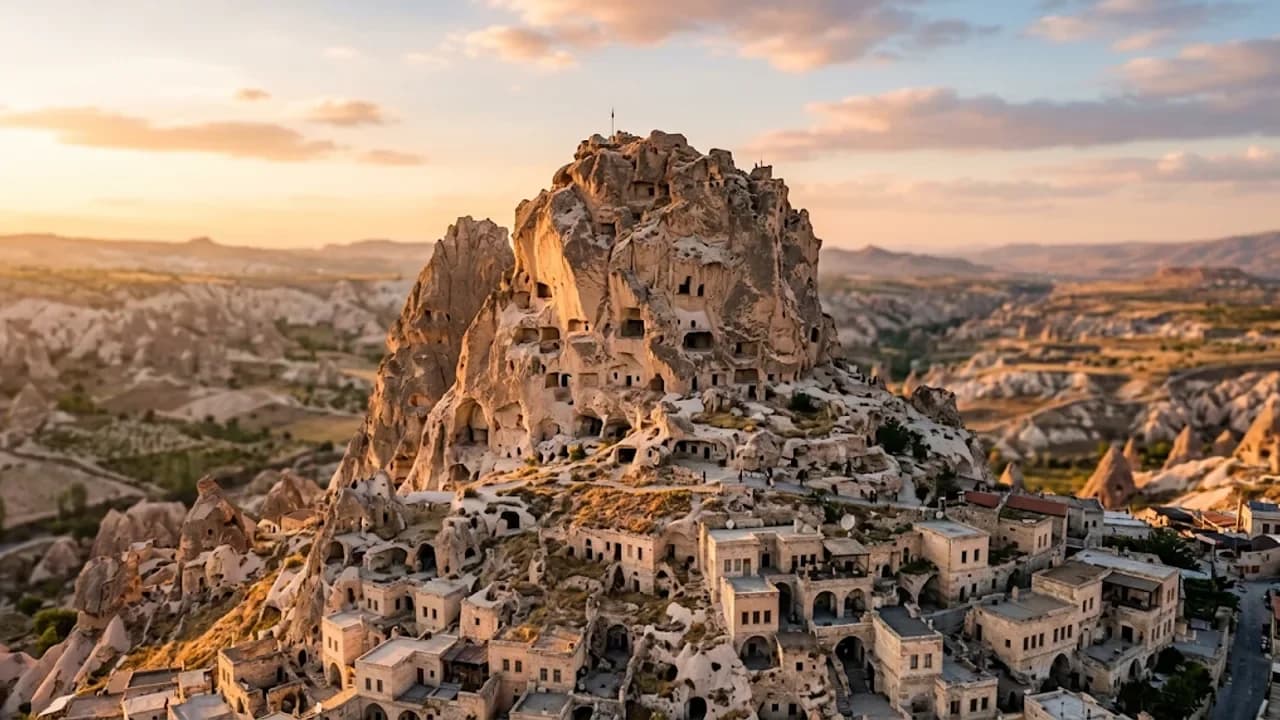
Uçhisar, like Göreme, is a township attached to the central district of Nevşehir. It lies only a few kilometres from Göreme, so the two areas are almost neighbours. What makes Uçhisar special above all is the vast Uçhisar Castle, which has become the emblem of the region. The highest point in Cappadocia, the castle can be seen from kilometres away.
Uçhisar has a somewhat calmer, less crowded atmosphere than Göreme. With its narrow stone streets, boutique hotels and terrace restaurants it is a peaceful settlement. It is also favoured for accommodation, being both centrally placed and a little away from the bustle of Göreme. Sitting on a terrace for breakfast in the morning with the view over Pigeon Valley in front of you is one of the most enjoyable moments in Cappadocia.
The area has been a strategic point throughout history. Its elevation makes it ideal for watching over the surroundings, which is why the castle is known to have been used for military and defensive purposes. Today Uçhisar draws visitors with both its historic fabric and its natural beauty. Most Cappadocia tours include Uçhisar on the route, because it is both easy to reach and rich in things to see. You can get from Göreme to Uçhisar by minibus or even on foot; the distance is that short.
Uçhisar Castle
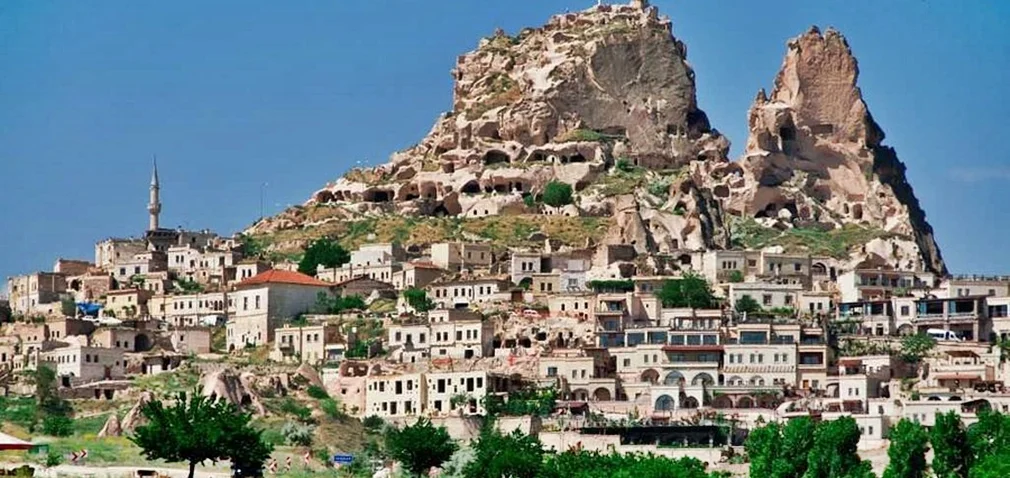
Uçhisar Castle is the highest point in Cappadocia and the emblem of the region. This vast fairy chimney, visible from everywhere in the area, was turned into a castle by carving into the natural rock. Climb to the top and a 360-degree panorama greets you. Göreme Valley, the surrounding fairy chimneys, Mount Erciyes and the unique geography of Cappadocia stretch out before your eyes. That view makes the climb worthwhile.
Going up to the castle you pass through narrow passages, stairways and hollowed-out chambers. There are many levels inside and the view changes with each one. Reaching the top level, you are met by a breathtaking panorama. It can be a little demanding for anyone uneasy with heights, but taken carefully it presents no problem. There are handrails on the stairways, though it is still worth taking care.
Uçhisar Castle is one of the legendary spots in Cappadocia for watching the sunset. The tones the rocks take on and the play of light as the sun goes down are enchanting. If there are balloon flights in the morning, you can watch the balloons drifting over the valleys from the castle. Going up early in the morning to watch the balloons offers a different experience again. The sunset moment can be particularly crowded, however; going early makes sense if you want a good spot.
There is an entrance fee for the castle and note: the Museum Pass is not valid here. You need to buy a separate ticket. Opening hours are generally from around 08:00, closing towards sunset in the evening. In the summer months in particular it is worth checking the final admission times. It is very close to the centre of Uçhisar and easily reached on foot from the town. There are cafés and restaurants around the castle, so you can sit down for something to drink afterwards. Uçhisar Castle is one of the places you will certainly want to see on a trip to Cappadocia.
Pigeon Valley

Pigeon Valley takes its name from the pigeon houses that the people living in the area carved into the rock. Pigeons were very important in that period, used both for carrying post and for their droppings, which were of benefit in agriculture. Hundreds of nests were therefore cut into the rock and pigeons were kept here. Traces of those nests can still be seen on the valley walls today. Pigeons still live here too; if you are lucky you may see them in flight.
Pigeon Valley extends between Uçhisar Castle and Göreme. The valley offers a wonderful route for walking in nature. Activities such as trekking, valley cycling and trail running are highly popular here. Some people even hold yoga sessions; the peaceful atmosphere of the valley creates an ideal setting for meditation and yoga. The walking route is well marked and the paths are clear. There is a course of around 4 to 5 kilometres, taking about two hours at a comfortable pace.
As in the other valleys, ATV and jeep safari tours cannot enter here. Those tours generally go up to the viewpoints on the edge of the valley and offer a panoramic view from there. The only way into the valley itself is on foot. That is in fact a good thing for the preservation of the valley's natural fabric; with no vehicle traffic it stays quieter and unspoilt.
The valley has entrances on both the Uçhisar and the Göreme side. Whichever you begin from, along the route you see fairy chimneys, pigeon houses carved into the rock and natural formations. The valley is at its finest in spring and autumn in particular; the vegetation is alive and the weather is neither too hot nor too cold. In the summer months setting out early is more comfortable, as the sun can be harsh in the afternoon. Taking water, a hat and sun cream is advisable. Pigeon Valley is a perfect stop for anyone looking for both nature and activity.
Places to Visit in Ürgüp
Temenni Hill

Ürgüp is one of the first settlements to have introduced the historical and natural beauty of Cappadocia to the world. Ürgüp played a large part in the region being discovered as a tourist destination. Temenni Hill, the highest point in the town, occupies a position visible from everywhere in Ürgüp. From the hill you can also see Mount Erciyes clearly; the view really is striking. Come up here at sunset and you see Cappadocia from a different angle as the lights of the town come on.
There are two tomb-towers on Temenni Hill. The one on the right as you enter serves as a shrine. People tie strips of cloth here when making a wish; over time the practice spread and the hill took the name Temenni, meaning "wish". When you visit you will see coloured cloths tied to the walls and to the branches. On the hill there is also a grave said to belong to the Seljuk sultan Alaeddin Keykubat III.
The other tomb-tower on the hill is the Tahsin Ağa Public Library. Although the library has now moved to the district centre, some works are still displayed in this historic building and there is a small reading area. If you have come up here, do call in — have tea inside and leaf through the books. The library's founder, Mustafa Güzelgöz, was an educator and librarian born in Ürgüp. He established Türkiye's first mobile library service and, for that pioneering work, was honoured by US President Kennedy and chosen librarian of the year in Amsterdam in 1969.
Inside the library there are manuscript books and old editions. The space is small but very welcoming; you can lose yourself among the books and spend time in the quiet. Drinking a tea with the view in front of you and glancing over what you are reading gives a particular kind of peace. Temenni Hill is very close to the centre of Ürgüp and easily walked up. Entry to the hill is free and it is always open. If you are stopping in Ürgüp, do visit this hill; view and culture come together here.
Asmalı Konak
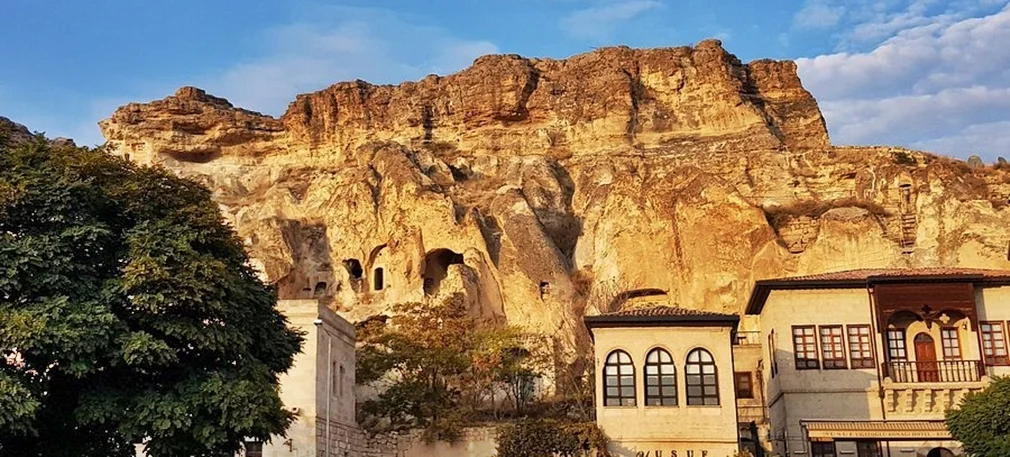
Asmalı Konak is a mansion made famous by the well-known television series broadcast in the early 2000s. It attracted great interest during the series and was inundated with visitors after it aired. People still come here out of nostalgic curiosity or a fondness for the series. With around 200 years of Greek architecture behind it, the mansion is one of the buildings reflecting the historic fabric of Ürgüp.
You are advised not to set your expectations too high, however. The area you can walk through inside the mansion is quite limited; most of the rooms are locked. In the one or two rooms that are open there is not much in the way of furnishing or display either. So what there is to see inside is unfortunately restricted. You see the building itself, but little other experience is offered. The mansion is also in rather poor condition through neglect; worn walls, faded paintwork and sections in need of repair are noticeable.
If you have seen traditional mansions elsewhere in Türkiye, Asmalı Konak may not feel very special. Indeed many historic mansions are far better restored than Asmalı and furnished with rich collections. Anyone coming to Ürgüp solely for Asmalı Konak may therefore be disappointed. But if you are in Ürgüp anyway and have plenty of time, and if you liked the series or are curious about it, you can drop by. Even looking at the building from outside can be a memory.
The mansion is in the centre of Ürgüp and easy to reach. Entry is free, but you are advised to go in knowing that there is not a great deal to see inside. You will be out within ten or fifteen minutes. A suggestion: if your time is limited and you need to narrow the list, it makes more sense to skip Asmalı Konak and give priority to the other sites.
Gomeda Valley

Gomeda Valley may not be as famous as Pigeon Valley or Kızılçukur, but it is one of the hidden gems waiting to be discovered. It spreads over an area some 6 kilometres long, continuing into Üzengi Valley. The valley's most remarkable feature is the vast pigeon houses carved into the rock. Seen from outside they look like a castle or a block of flats several storeys high. These pigeon houses are impressive architecturally and also give clues about the history of the area.
In the Roman period Gomeda Valley was a lively settlement. It is estimated that around 600 houses, 2 churches, 2 necropolises and an underground city were located here. So the valley is not only a natural formation but carries the traces of thousands of years of human life. Walking through, you can see the remains of houses, graves and churches carved into the rock. In some sections there are entrances descending into the underground city, but these are generally closed or unsafe.
To reach Gomeda Valley you can enter from the town of Mustafapaşa in the Ürgüp district. In Mustafapaşa, the road to the valley starts from Cumhuriyet Square. The town is well worth seeing in its own right; with its old Greek houses, stone streets and quiet atmosphere it is a very appealing place. Before heading to Gomeda it is pleasant to wander a while in Mustafapaşa, perhaps have a coffee. Another road up to the valley passes through the village of Ayvalı. Whichever route you choose, fine views await you along the way.
As the valley is not crowded it is ideal for anyone wanting to be alone with nature. The walking route may not be clearly marked, so a map or GPS is useful. It is not a demanding course, but comfortable shoes and water are essential. Gomeda offers a calm exploration away from the tourist crush. It is a wonderful option for anyone wanting a different experience after seeing Cappadocia's popular sites.
The Three Graces
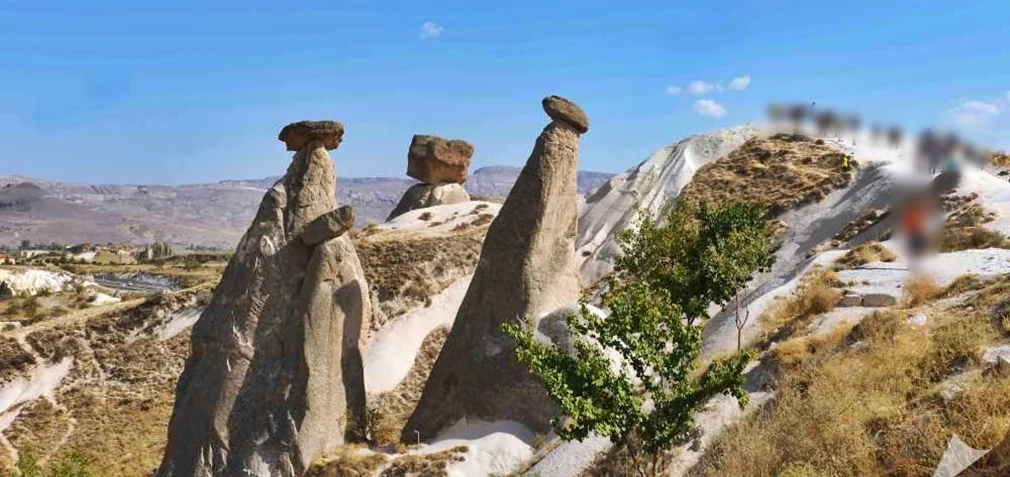
The Three Graces is the name given to three fairy chimneys that have become an emblem of Cappadocia. The finest examples of the classic capped fairy chimney form are seen here. Most visitors coming to Cappadocia have their photograph taken in front of this trio; this is the indispensable subject of Cappadocia postcards. Standing side by side, the three fairy chimneys are like a magnificent work of art shaped by nature over millions of years.
The Three Graces also has a fine legend attached to it. According to the story, the King of Cappadocia had a daughter, and this princess fell in love with a shepherd living in the area. The king would not allow his daughter to marry a shepherd, but the princess married the man she loved all the same. The couple had a child, and yet the king did not forgive his daughter even though he had a grandchild. In his fury he sent soldiers after the family. Just as they were about to be killed, the princess begged God and prayed to be delivered from the situation. At that moment all three turned to stone. According to the belief, the fairy chimney at the front represents the shepherd, the middle one the child and the one at the back the princess. It is a romantic and sorrowful story; visitors who hear it begin to look at the fairy chimneys with different eyes.
To see the Three Graces you need to head from Kızılçukur Valley in the direction of Ürgüp. There is a viewing terrace along the road from which you can see them easily. They can in fact be seen from many points, but the clearest and closest view is caught from this terrace. It is an ideal stop for a short break and a photograph. Seeing them under different light at sunset or in the middle of the day gives entirely different feelings.
The viewing terrace is easy to reach; if you come by car you can park and look for a few minutes. Tour coaches generally stop here too. Being close to the centre of Ürgüp, you can easily call in while travelling independently as well. The Three Graces is one of Cappadocia's iconic sites; going home without seeing it would be a loss.
Ortahisar Castle

Ortahisar Castle has the distinction of being the largest fairy chimney in the Cappadocia region. Like a chimney for the whole of Cappadocia, it rises in all its majesty in the middle of the town of Ortahisar. Visible from kilometres away, this vast mass of rock is both a natural formation and a historic structure shaped by human hands. The chambers, passages and stairways carved into it were used by different civilisations over the centuries.
The shaping of Ortahisar Castle by human hands goes back as far as the Hittite period. Carving began initially for protection; its height made it an ideal point for watching over the surroundings and defending against attack. In time it came to serve as a powerful fortress and was used as a refuge in the Roman, Byzantine, Seljuk and Ottoman periods. Each civilisation added something to the castle, opening chambers and cutting passages. Walking inside today, you see traces belonging to different periods.
Climb to the top of the castle and a panorama greets you. You can see Ürgüp, Avanos, Göreme and the surrounding valleys from above. Mount Erciyes appears in the distance too. The view really is breathtaking; it is a wonderful spot for anyone wanting to take photographs. Coming up here at sunset has a beauty of its own, though the view is striking at any hour.
Going up to the castle you have to use narrow, steep stairways. Some sections can be a little demanding, particularly for anyone uneasy with heights. Taken carefully and without rushing, however, they present no problem. The stairs are of wood or stone and may be worn in places. Wearing comfortable shoes is essential. Lighting inside the castle is limited and some sections are quite dark.
There is an entrance fee for Ortahisar Castle and note: the Museum Pass is not accepted here. You need to buy a separate ticket. The castle is right in the centre of the town of Ortahisar and very easy to reach. It is only a few kilometres from Ürgüp. Ortahisar is also a quiet and authentic town; after coming down from the castle it is pleasant to walk its narrow streets and sit in the local cafés. Ortahisar Castle is one of the most impressive structures in Cappadocia — one of the places that has to be seen.
The Underground Cities of Cappadocia
The underground cities of Cappadocia are one of the region's most fascinating features. Over thousands of years the people living here carved out places of refuge below ground to protect themselves from constant raids and plunder. They found the answer in building a second village — indeed a city — beneath their own. Every civilisation that came here, from the Hittites (1650–1200 BC) to the Byzantines, maintained and developed the system. There was a descent below ground from inside every house; at a moment of danger families could get down quickly.
In time these underground villages were linked to one another by tunnels and turned into vast underground cities. Thirty-six of them have been brought to light today, but archaeologists estimate that there are somewhere between 150 and 200 underground cities below ground. So a great many underground settlements are still waiting to be discovered.
The most impressive aspect of these cities is that they have highly sophisticated urban planning. Inside them are ventilation systems, water wells, irrigation channels, heating areas and sewage systems. They were designed not merely for shelter but for sustaining life. There are churches, chapels, refectories, kitchens, stables and even public institutions such as an asylum. People could stay here for months, until the danger outside had passed.
Cappadocia is known to have at least 150 underground cities, but only a few of them are open to visitors. Most are kept closed for safety reasons or because restoration work has not yet been carried out. Even those that are open offer a striking experience; narrow passages, low ceilings and labyrinthine corridors take you back centuries.
Derinkuyu Underground City
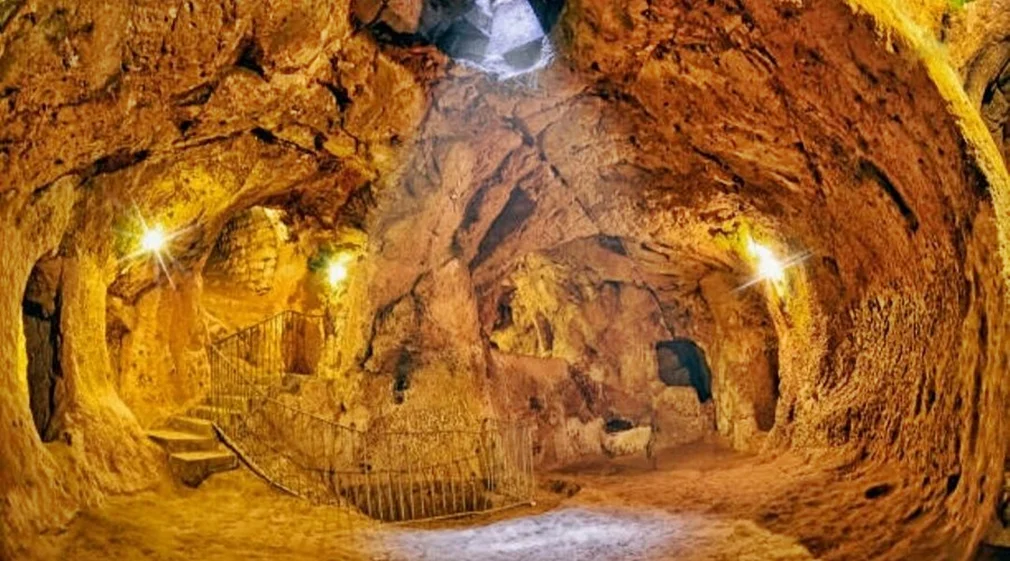
Derinkuyu Underground City is one of Cappadocia's most popular and largest underground cities. Descending eight levels below ground, this vast structure is estimated to have housed as many as 50,000 people at one time. Settled life here is thought to reach back to the Assyrian period; so there are thousands of years of history in this place. Walking through it, you marvel at how people managed to create such a complex structure.
Unlike other underground cities, Derinkuyu holds religious buildings such as a missionary school, a confessional and a baptismal pool. That shows the city to have been not only a refuge but an active centre of life. Christian congregations were educated here, worshipped here and sustained community life. Inside you can see churches, chapels and religious symbols.
Derinkuyu takes its name from the deep wells within it — derin kuyu means "deep well". These wells descend as far as 60 metres below ground and serve as a natural ventilation system. Clean air reaches every level thanks to them, which is what allowed people to remain here for months. Water was also drawn from these wells. The engineering of the system really is impressive.
It is said that there are a further 400 to 500 underground cities beneath Derinkuyu, with around 600 entrance and exit doors belonging to them. Some of those doors are still located inside inhabited houses, and local people use parts of the underground city as storage. So the underground city is not merely a tourist site but continues to be part of daily life.
Derinkuyu Underground City is in the district of Derinkuyu, 30 kilometres from the centre of Nevşehir. Getting there is easy, by minibus or private vehicle. A guiding service is offered within the city, but the guides are generally local villagers rather than professional tourist guides. They still share local knowledge and can answer your questions. Entry is free with the Museum Pass, which is another advantage.
Inside there are narrow passages, low ceilings and steep stairways. It can be difficult for anyone uncomfortable in enclosed spaces or with claustrophobia. Although the ventilation is good, some sections are damp and cool. Taking a light jacket is a good idea. Derinkuyu is Cappadocia's most impressive underground city; you should not go home without seeing it.
Özkonak Underground City

Özkonak Underground City is an underground settlement 14 kilometres from Avanos, with four levels open to visitors. Although not as famous as Kaymaklı and Derinkuyu, it draws attention with features of its own. Because an eagle statue belonging to the Hittites was found inside, it is thought that the foundations of the city were laid by the Hittites. So this place has a past reaching back at least three to four thousand years.
The most important feature setting Özkonak apart from other underground cities is the long holes that allowed communication between the different levels. These holes served as a kind of communication tunnel; those on the upper levels could send their voices down to the lower ones. In that way coordination was maintained between the different sections of the city. At a moment of danger everyone could be made aware of the situation. It is a highly practical solution.
Another interesting difference is the holes located above the tunnel beyond the rolling stone door. These were used for defence. When an enemy tried to enter through the tunnel, hot oil or liquid could be poured through them. So the inhabitants did not simply close the door and hide; they created an active defence mechanism. Military strategy is clearly visible in the design of the underground city.
A further feature of Özkonak is the way its stone doors were made. The stone doors of the other underground cities in Cappadocia were made outside and then brought in. At Özkonak, however, the stone doors were worked directly on the inside. That shows a different approach in engineering terms. The doors are round and heavy, designed to prevent an enemy from getting in.
There is an entrance fee for Özkonak Underground City and the Museum Pass is accepted. Getting there from Avanos is easy, by minibus or private vehicle. It does not get as crowded as Derinkuyu and Kaymaklı, which makes for a quieter visit. Inside there are narrow passages, low ceilings and steep stairways. It can be demanding for anyone uncomfortable in enclosed spaces, but it is generally well lit. Even in the summer months the interior stays cool, so a light jacket is a good idea. Because Özkonak is less crowded than Derinkuyu it can be seen a little more comfortably. It is a wonderful stop for anyone wanting to experience the underground cities of Cappadocia.
Mazı Underground City

Mazı Underground City is an underground settlement 18 kilometres from Ürgüp, with eight levels. Its capacity is estimated at around 6,000 people. Known in antiquity as Mataza, this underground city has four separate entrances in different places. That multiple-entrance system was an advantage both for security and for rapid access from different areas.
The most important feature setting Mazı apart from other underground cities is the imposing church inside it. This church is larger and more finely worked than the churches usually seen in underground cities. Traces and architectural details can still be seen on its walls. It is a powerful structure showing the city to have been a centre of religious life.
There are graves on the roof section of the underground city. These were used as a necropolis; in other words the inhabitants of the city buried their dead here. If you want to see the graves, you need only tell the attendant at the entrance. They will describe where you should come out and you reach the roof. The burial ground is in the open air, above the underground city.
Entry to Mazı Underground City is free with the Museum Pass. The staff at the museum will also offer a free guiding service if you wish. They are not professional tourist guides, but they share local knowledge and can answer your questions. That is helpful in particular for anyone visiting an underground city for the first time.
As Mazı is not as famous as Derinkuyu and Kaymaklı, it is generally less crowded. It is ideal for anyone wanting to look round in a calm setting. Inside there are narrow passages, low ceilings and stairways; wearing comfortable shoes matters. The lighting is good and the environment is damp and cool. Getting there from Ürgüp is easy, by taxi or private vehicle. Mazı is one of the underground cities of Cappadocia that has stayed hidden; it is worth discovering.
Kaymaklı Underground City

Kaymaklı Underground City is located in the town of Kaymaklı, 20 kilometres from Nevşehir. Although it is about half the size of Derinkuyu, it is regarded as one of the most important underground cities in Cappadocia. It has a capacity of around 5,000 people and its history is thought to reach back to the Phrygian period. So a past of at least 2,800 years is involved here.
Kaymaklı has an eight-level structure, but only four levels are open to visitors. The other levels are kept closed either for safety reasons or because restoration is lacking. Even so, the four levels that are open tell a great deal about life underground. The first level, the topmost section, belongs to the early period and is the oldest part of the original structure. As you descend you see sections added later.
Inside Kaymaklı there are living quarters, kitchens, refectories, cellars, stables and churches. The system of ventilation shafts, water wells and round stone doors is highly developed. The stone doors are particularly striking; at a moment of enemy attack these doors were closed and locked from within. They are so heavy that opening them from outside is almost impossible.
Another feature of Kaymaklı is that it is connected to Derinkuyu by underground tunnels. In other words there is a hidden passage between the two underground cities. This tunnel is 9 kilometres long, though today it is closed to visitors. Even so, the connection shows what an extensive network the underground cities of the region formed.
There is an entrance fee for Kaymaklı Underground City and the Museum Pass is accepted. You can reach it easily from Nevşehir by minibus or private vehicle. Inside there are narrow passages, low ceilings and steep stairways. It can be demanding for anyone uncomfortable in enclosed spaces, but it is generally well lit. Even in the summer months the interior is cool, so a light jacket is a good idea. Because Kaymaklı is less crowded than Derinkuyu it can be seen a little more comfortably. It is a wonderful stop for anyone wanting to experience the underground cities of Cappadocia.
Tatlarin Underground City

Tatlarin Underground City lies 10 kilometres from the Acıgöl district of Nevşehir. With two levels open to visitors, this underground city is distinguished from the others by some interesting features. The most remarkable difference is that it has lavatories. In the other underground cities lavatory systems are either absent or very basic; at Tatlarin a more developed system of hygiene was established. That indicates that long-term life here was more organised.
Another feature of Tatlarin is that it is more spacious than the other underground cities. It contains more than one church and there are large storerooms. These features suggest that this may have been not merely a refuge but a monastery complex. Monks and hermits may have led a communal life here, worshipped and carried out monastic activities. The spacious areas provide a suitable setting for community life.
Remnants of frescoes and religious symbols can be seen on the church walls. The size of the storerooms shows that a considerable quantity of food was kept here. The refectories and kitchen areas are also quite large. Tatlarin was a place where daily life was not merely sustained but organised.
Entry to Tatlarin Underground City is free. That is a fine advantage for budget-conscious travellers. Being free may, however, lead to some shortcomings in terms of upkeep and restoration. Even so, the basic structure can be seen and it is worth a visit. Getting there from Acıgöl is easy, by minibus or private vehicle.
Lighting inside may be limited; taking a torch or using your phone light is useful. There are narrow passages and low ceilings, but it is generally a little more open than the other underground cities. Tatlarin offers an uncrowded, quiet underground city experience. It is a good option for anyone wanting to discover the lesser-known underground cities of Cappadocia.