-1.webp&w=3840&q=75)
There is one dish no visitor to Cappadocia goes home without trying: pottery kebab. Cooked for hours inside a clay pot, this meat dish stays with you as much in memory as on the palate. An emblem not only of a recipe but of the moment it is served and of old Anatolian cooking methods, pottery kebab is among the flavours that have put Cappadocia on the world's gastronomic map in recent years. In this article we will take it apart piece by piece — from its history to its ingredients, from how to make it at home to what it costs in a restaurant.
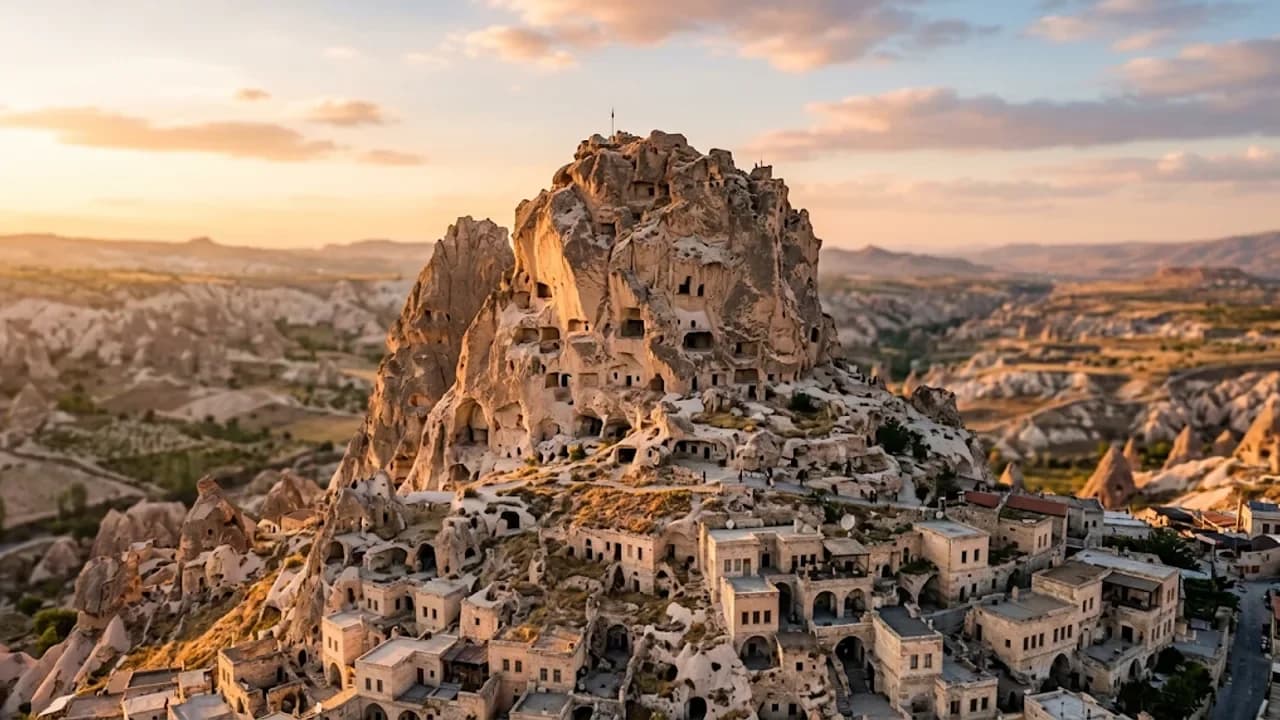
Let us settle one thing first: pottery kebab is not an ordinary kebab. The length of the preparation, the character of the vessel, the dramatic breaking open at the table — all of it together turns this dish into as much a performance as a flavour. Impossible without the Avanos pots shaped from Cappadocia's volcanic earth, it is the culinary version of a geographical marvel. Let us start at the beginning, with the story.
The Story of Pottery Kebab: From Caravanserais to Kitchens
Cooking in earthenware is a tradition thousands of years old in Anatolia. The Hittites, the Phrygians, the Romans — all used clay vessels as heat-resistant tools that held moisture and preserved flavour. The roots of the modern pottery kebab reach back to the Ottoman period, and in particular to the caravanserai routes that crossed the Cappadocia region. Travellers and caravan drivers on journeys lasting many hours needed meat dishes that were already cooked, sealed shut and easy to carry. The earthenware pot answered that need perfectly.
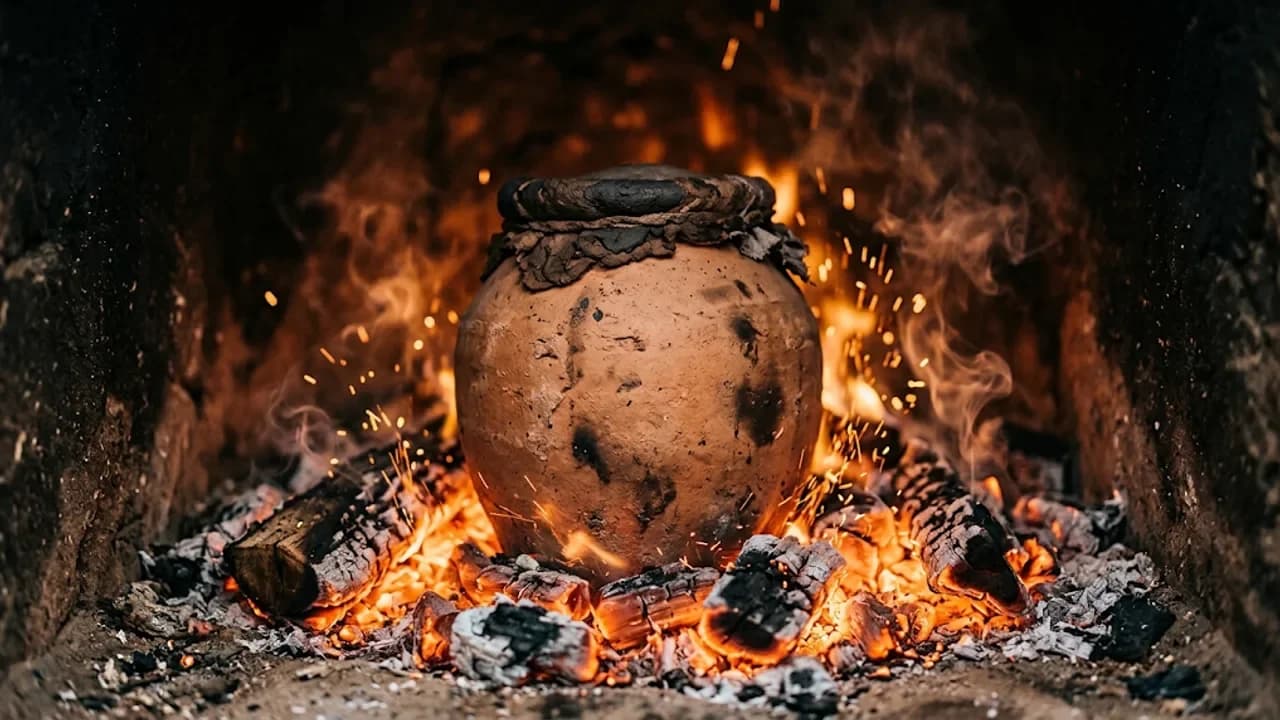
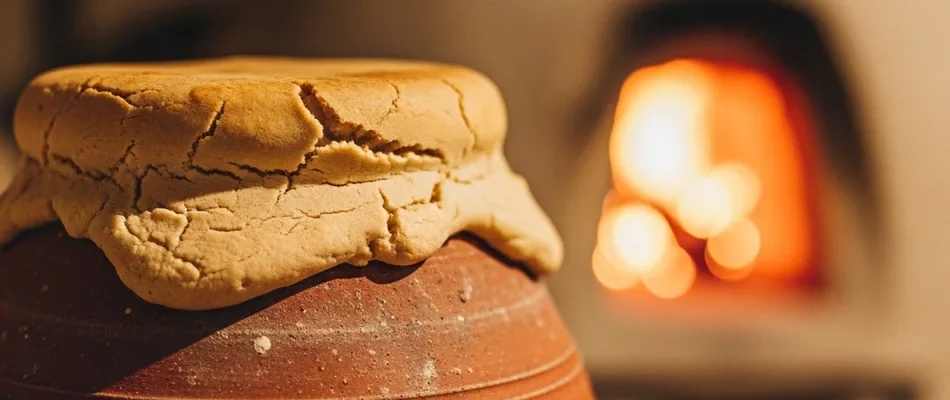
The potters of the village of Avanos have been making these vessels for centuries. The red clay carried down by the Kızılırmak river, with its heat-resistant mineral structure, made an ideal cooking pot. A pot was taken, meat and vegetables were placed inside, the mouth was sealed with dough, and it went into the tandır — and hours later, when the mouth was cracked open, the deeply aromatic dish that emerged was the finest hospitality a caravanserai keeper could offer a guest. It is still cooked the same way in modern restaurants today; the only difference is that the traditional tandır has sometimes given way to a stone oven.
Ingredients: Simple, but They Have to Be Right
The ingredients of pottery kebab are not complicated. The main element is lamb or beef, cut into cubes, with slightly fatty parts preferred. Fat adds richness and tenderness over the long cooking time; entirely lean meat can dry out. Alongside it, vegetables are layered in: tomatoes, kapya peppers, aubergine, potato, onion and garlic. The spicing is minimal — salt, black pepper, oregano, a little chilli flake. Heavy spicing drowns the natural flow of the flavour.
Some regional variations add other things. Along the Aksaray–Cappadocia line, sun-dried tomatoes and a little extra turmeric go in beside the pepper; around Avanos the garlic is more generous. There are also local versions using lemon or unripe-grape juice, which lend a light acidity that balances the dish. It is worth resisting the idea that more ingredients make it better: the secret of pottery kebab lies in a simple but well-judged choice of ingredients.
Avanos Pots: The Secret of the Cooking
The quality of a pottery kebab is directly tied to the quality of the pot. The traditional vessels made in Avanos are shaped from the particular red clay carried down by the Kızılırmak. That clay is heat-resistant, conducts heat evenly and does not react with food. Once fired, the pot's micro-pores hold the moisture of the dish inside while also managing the risk of a steam burst.
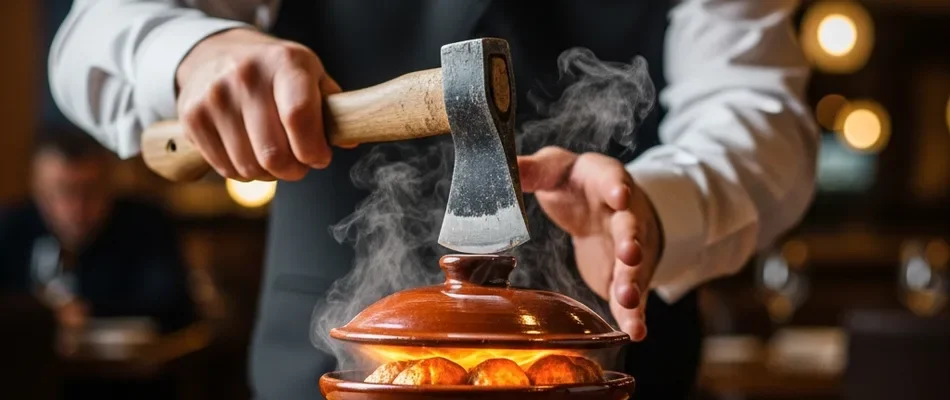
An Avanos pot traditionally holds six to eight litres, enough for a pottery kebab for two to four people. Larger pots are made too, but as the size grows so does the cooking time. The mouth of the pot is usually narrow and round, which makes it easy to seal with dough. When cooking is finished the pot is brought to the table and broken with a small axe or a heavy knife. That moment of breaking is both a dramatic ritual and a technical necessity: there is no way to open the sealed mouth by the old method — it has to be broken.
The Cooking: Four Hours of Patience
The real secret of pottery kebab is the long cooking time. Meat and vegetables are placed inside the pot in layers; the common practice is fatty meat at the bottom, vegetables above it, and the lighter vegetables on top. No water is added — the natural juices of the vegetables provide all the liquid the meat needs. The top of the pot is traditionally sealed with dough, which keeps the moisture in during cooking and balances the steam pressure.
Cooking is usually done in a stone oven or over charcoal embers, at a low temperature of around 160–180°C. The time is three to four hours; pots cooked longer let the meat fall apart into fibres. Over those hours something close to a small miracle happens inside the pot: the meat releases its own juices, the vegetables soften in them, and the spices work their way through everything. What comes out is a dish that melts in the mouth without needing so much as the tip of a fork — its sauce concentrated but light, its flavour built in layers.

The Serving Ritual: The Moment the Pot Is Broken
When the hot pot arrives at the table, something close to a ceremony begins. The server comes with a small axe or hammer, tells the guests a short story, then strikes the mouth of the pot firmly. Because the mouth is sealed with dough, the first blow usually breaks the seal; the second breaks the mouth of the pot itself. The rush of steam and aroma that follows fills half the restaurant. This is the moment guests hold their phones ready for — the most photographed and filmed part of the meal.
Once the pot is broken, the contents are poured into a copper tray or served straight from the pot onto plates. Bulgur pilaf, charred peppers, fresh parsley, ayran and salad come alongside. The dish is served hot and is usually shared between two and four people. Bread is dipped into it; bulgur pilaf is ideal for soaking up the sauce. The ritual has become almost standard in restaurants, though every place has its own style — some prefer a small hammer to an axe, some serve in traditional dress.
Where to Eat It: A Town-by-Town Guide
Pottery kebab can be found across every settlement in Nevşehir province, but each place has its own character. Avanos, where the pots come from, offers the most authentic experience; some restaurants will show guests that their pots come from Avanos itself. Göreme sees the heaviest tourist traffic — several restaurants on every street carry pottery kebab on the menu, though it is worth knowing that quality can vary.
Ürgüp, Mustafapaşa and Ortahisar are quieter alternatives, away from the crowds, where your chances of finding a restaurant that keeps to the traditional recipe are good. Uçhisar is ideal for a dinner combined with a panoramic view; pottery kebab eaten while looking out over the valley is a different feeling altogether. There are places serving it in the parts of Aksaray and Niğde close to Cappadocia as well, though those tend to fall outside most visitors' itineraries. In the busiest periods it is wise to book, especially in the evening.
Pottery Kebab Prices, 2025–2026
Prices vary with the location of the restaurant, the type of meat and the size of the portion. For the 2025–2026 season, an average price table looks like this:
- Pottery kebab for two: 800–1,500 TL
- Pottery kebab for four: 1,400–2,500 TL
- Family pot for six or more: 2,500–4,000 TL
- Lamb version (premium): the upper end of the range
- Beef version: the lower end of the range
These prices are generally for the pottery kebab itself; the pilaf, salad and ayran that come with it are priced separately. In premium restaurants the mezes served alongside can push the total higher. Prices tend to rise in the busiest tourist areas, while in quieter villages the same quality can cost less. Price alone is not a measure of quality — unusually low prices can be a warning sign, but mid-range restaurants generally offer the best balance of value and quality.
Can You Make Pottery Kebab at Home?
Yes, you can — although getting exactly the same result without an Avanos pot is difficult. You can order a pot from Cappadocia online; small pots for two to four people run at around 200–400 TL. A more practical alternative is a stone casserole or a deep baking dish; it will not give quite the same result, but it comes close.
A simple recipe: 1 kg of cubed lamb or beef, 2 large tomatoes, 2 peppers, 1 aubergine, 1 potato, 1 onion, 4 cloves of garlic, salt, black pepper and oregano. Dice everything, layer it into the pot (meat first, then the vegetables), and scatter over the salt and spices. Add no water. Seal the mouth of the pot tightly with dough or aluminium foil. Put it into a 160°C oven and cook for three to three and a half hours. When the time is up, it is ready to serve. The same recipe works in a casserole, where the time can come down to two to two and a half hours.
What to Eat With It: The Classic Companions
Pottery kebab is not a dish to eat on its own; it finds its real value alongside the right companions. The most classic of these is bulgur pilaf. The soft grains draw in the dark sauce from the pot and carry a concentrated flavour in every spoonful. Rice pilaf is also used, but bulgur is the traditional Cappadocian choice. Finely chopped parsley, fresh mint and sliced raw onion go beside the pilaf.
Cacık or haydari is a good choice for balancing the richness. For salad, a shepherd's salad or lettuce hearts with sumac and pomegranate molasses is common. Ezme, made from charred peppers and tomatoes, always has a place on the menu. Ayran is the most traditional drink; modern restaurants may also suggest şıra or a light red wine. At dinner, the traditional close after pottery kebab is a Turkish coffee or a dessert with kuru kaymak — a mixture of honey and grape molasses in particular makes a fine, and vegan, finish.
How to Taste Pottery Kebab Properly: Practical Tips
If you want to get the most out of pottery kebab in Cappadocia, a few practical points help. First: book. In the summer peak and at weekends, popular restaurants fill up hours in advance. Second: because the cooking takes so long, it has to be served hot — if a restaurant tells you the pot will be ready in two hours, either be patient or choose something quicker. Some places offer a ready pot; these have been cooked earlier and reheated, and the difference in flavour shows.
Third: it is a dish for sharing. Ordering a whole pot for yourself is neither economical nor easy to finish. A pot for two feeds two to three people; a pot for four suits a group of four to six. Fourth: do not miss the breaking. When the server comes to crack the pot, have your phone ready — it is the most memorable part of the experience. Fifth: try a dessert afterwards. Traditional candied pumpkin with walnuts, or baked rice pudding, rounds off the weight of the pottery kebab with a soft finish.
Is There a Vegetarian Version?
The classic pottery kebab is a meat-led dish, but vegetarian versions have started to appear in recent years. Mushrooms, chickpeas or haricot beans stand in for the meat, with the same cooking method. The vegetables are generous: aubergine, courgette, pepper, tomato, potato, onion and garlic. The spicing stays at the same level as the meat version. The result is not as intense as the original, but it has a character of its own.
A vegetarian pottery kebab is not on every menu; traditional restaurants in particular keep to the standard meat recipe. Vegetarians who want the experience are better off looking at modern, smaller restaurants, some of which also make a vegan version. Further alternatives for vegans are a vegetable pot or a mushroom pot; look for these in the vegetable or starter sections of the menu. Calling ahead is the safest approach — many places will prepare a vegetarian version on request.

A Whole Geography Inside One Pot
Pottery kebab is experienced less as an ordinary dish than as a cultural ritual. The pot from the red earth of Avanos, the traditional way the villages of Cappadocia prepare meat, the heat of the stone oven, the drama of the breaking at the table — put all of those together and the dish moves beyond the measures of a meal. It is a caravanserai tradition carried into modern restaurants, and it works as a bridge between the past and the present.
KMU Mehmet Usta, at the summit of Uçhisar, is one of the places that keeps to the traditional recipe: meat cooked in Avanos pots, in a stone oven, for the traditional length of time — and given another dimension by the panorama of the valley. That line of craft, running from the beginning in Aksaray in 2009 to the ridge of Uçhisar in 2025, is a concrete example of the effort to keep pottery kebab in its pure form. Having come as far as Cappadocia, it is worth not leaving without this ritual — an evening ritual as important as the magic of a morning balloon flight. When a pot is opened, what is inside is not only meat, but a story thousands of years old.