-1.webp&w=3840&q=75)
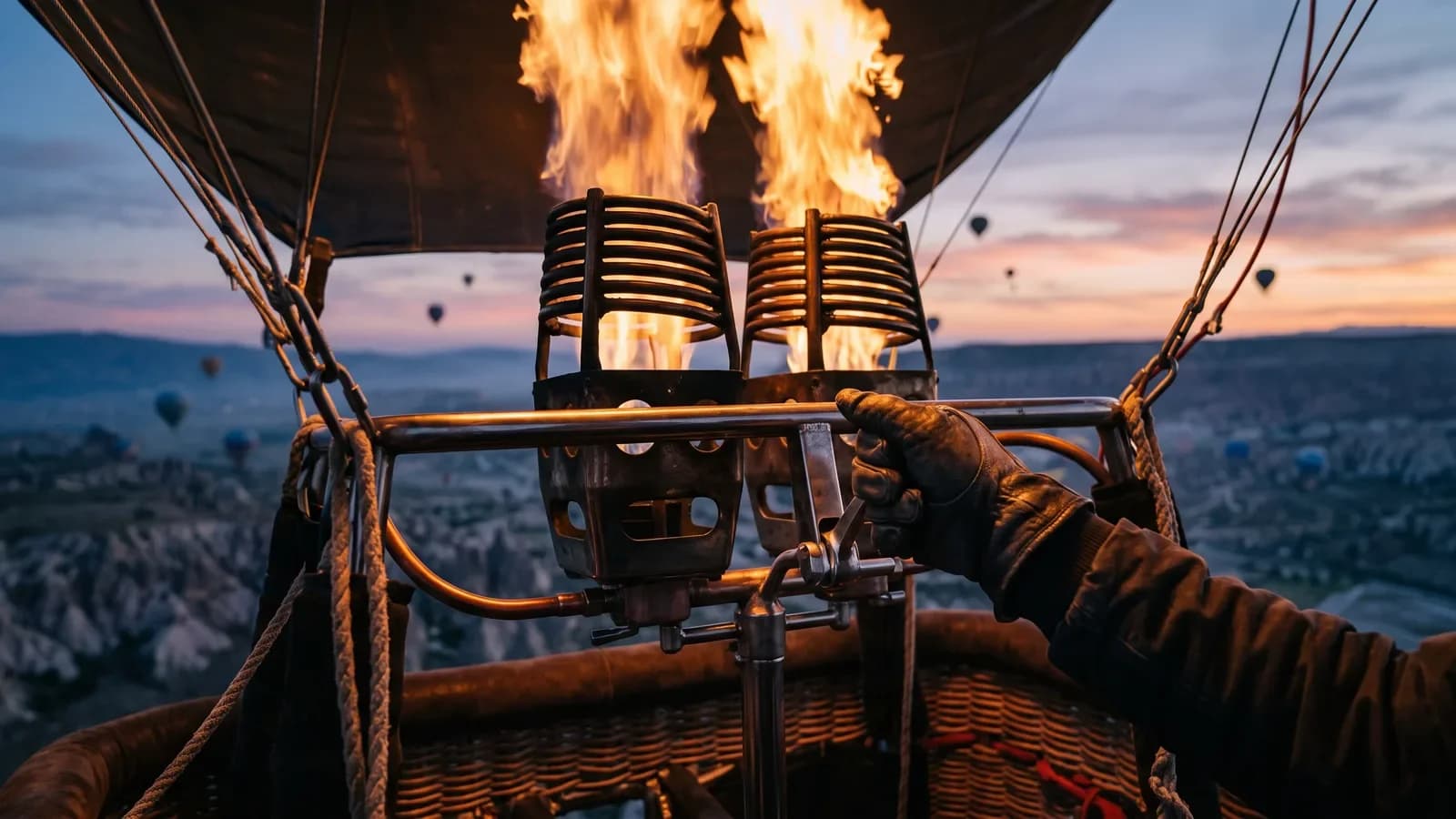
Everyone thinking of coming to Cappadocia has the same first big question: is it safe to go up in a balloon? Alongside the sunrise view we all see on social media, the accident reports that surface from time to time sit somewhere at the back of the mind. In this article we will look for an answer to whether a Cappadocia balloon flight is safe, without exaggeration and without decoration, and set out every link in the chain — from the regulator to pilot licensing, from equipment maintenance to the decisions made about the weather.
Hundreds of thousands of visitors fly in balloons over the Cappadocia region every year. At the height of the season, more than a hundred balloons rise over the valley with the first light of morning. Understanding how traffic on that scale is managed, which rules apply and what the realistic picture of the risk actually is makes the soundest starting point — both for making an informed decision and for enjoying the flight itself.
Civil Aviation Oversight: Which Rules Govern Cappadocia's Balloons?
All commercial balloon flights in Türkiye are regulated and inspected by the Directorate General of Civil Aviation (SHGM). To operate at all, a balloon company must keep a complete set of documents: an operating licence, a technical fitness certificate for each balloon, pilot licences and insurance policies. These are renewed at regular intervals, and if any one of them lapses, that balloon is grounded immediately.
Cappadocia is one of the most tightly regulated balloon regions in the world. The decision to fly on a given morning does not rest with an individual company: under the coordination of the civil aviation authority, meteorological reports, wind direction and speed, and visibility are assessed together. No balloon may take off without clearance. This layer of institutional control helps explain why a region where tens of thousands of passengers fly every morning remains, statistically, a safe one.
Pilot Licensing, Medical Examinations and Experience
Qualifying as a balloon pilot takes years. Theory classes, simulator training, flights alongside an experienced pilot, written and practical examinations — only after all of that does the civil aviation authority issue a licence. Beyond that, a pilot undergoes a medical examination every year and cannot continue to fly unless their eyesight, heart and general health are reported fit for duty.
The great majority of pilots working in Cappadocia have thousands of hours of flying experience. The region's wind patterns, the way the valleys load with heat, which direction of flow dominates in which season — all of this requires local knowledge. A pilot who has flown over the same valley for years has the accumulated experience to notice a sudden change and correct course. The level of experience among Cappadocia's pilots is, by comparison with other balloon regions worldwide, notably high.
The Equipment: What Checks Does a Balloon Go Through?
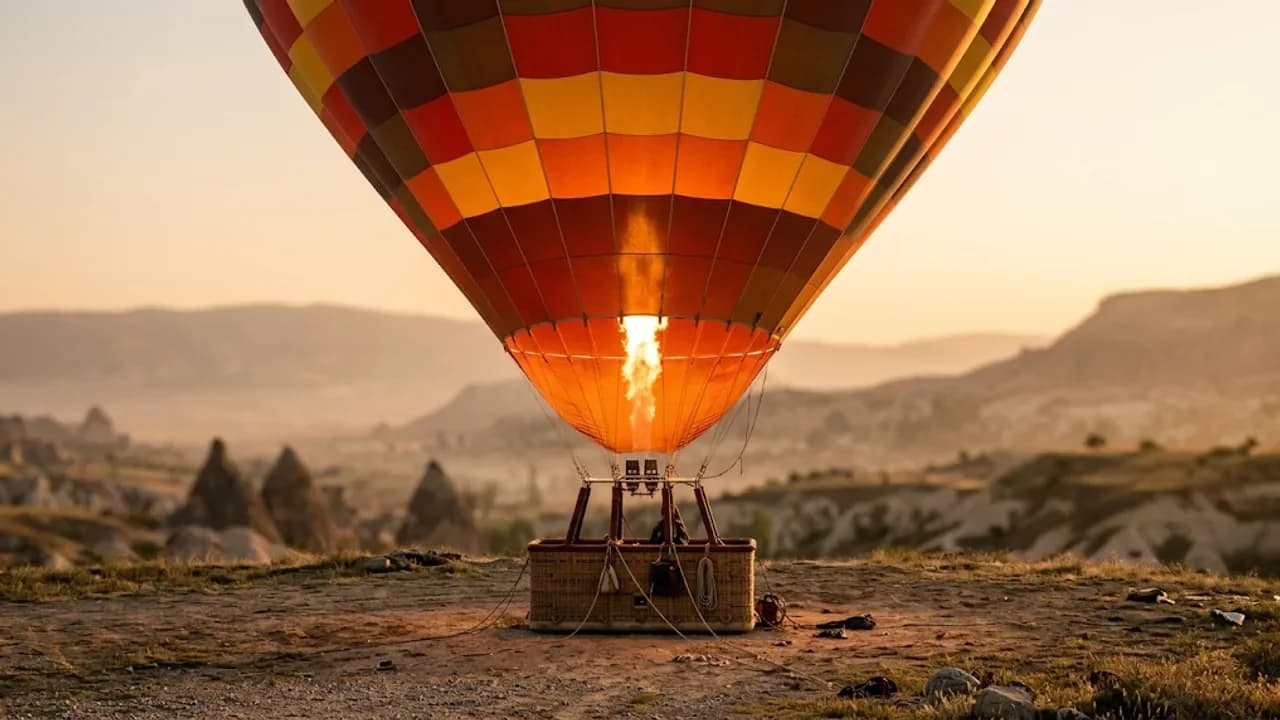
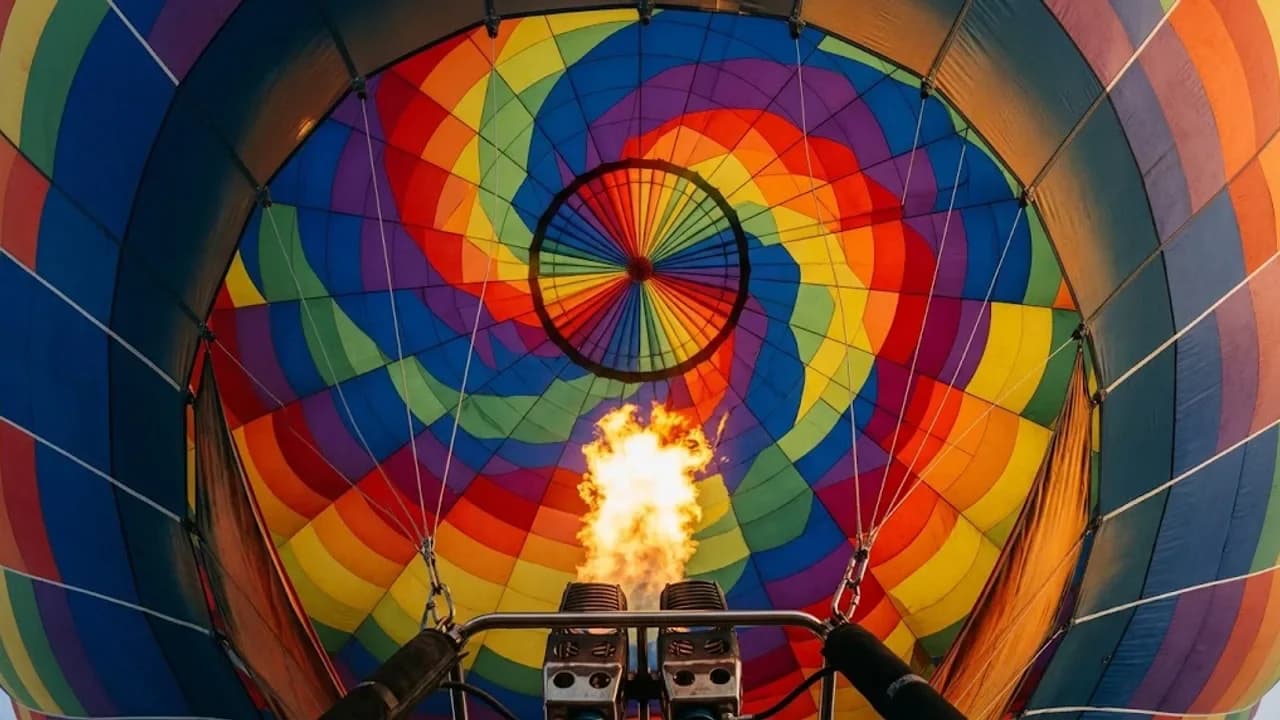
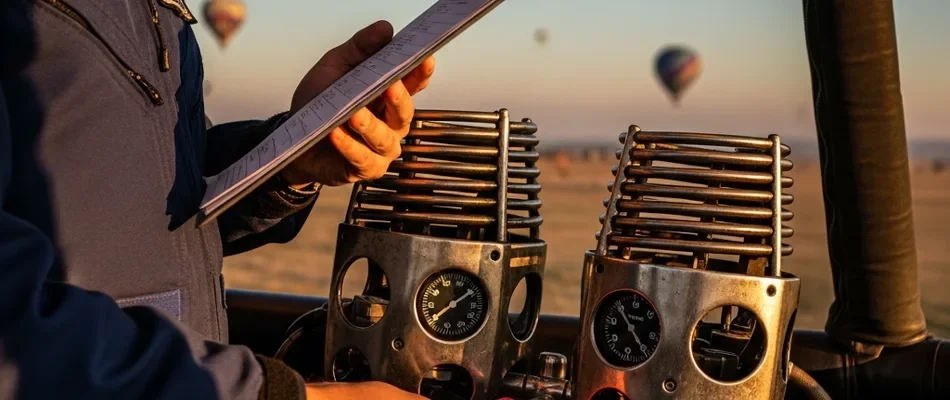
A balloon's main components — the envelope, the basket, the burner system, the gas cylinders, the radio and the navigation instruments — are all subject to regular maintenance schedules. Before every flight the pilot works through a checklist and inspects each part: burner pressure, the seal on the cylinders, any wear in the envelope, the structural integrity of the basket. If anything gives cause for concern, that balloon does not fly.
Beyond this, every balloon undergoes a mandatory annual major inspection, in which an authorised technical service examines the envelope's hours, the integrity of its seams and material fatigue in detail. After a certain number of hours, envelopes are replaced entirely. Thanks to that strict programme, most of the balloons flying in Cappadocia are equipped with current gear. A balloon's age alone is not a measure of safety — a balloon with regular maintenance and a valid certificate is technically ready to fly whatever its age.
The Weather Decision: What Happens at 04:00?
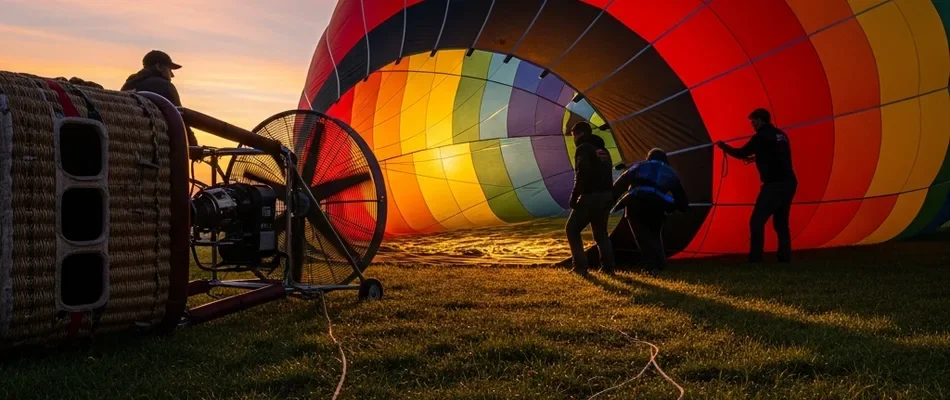
A cancelled balloon flight is often a passenger's first negative feeling about the whole business. In fact those cancellations are the foundation of its safety. At around four in the morning, the operators assess meteorological reports, wind forecasts, cloud base height and visibility. A consensus is reached among the pilots; if the ground wind exceeds 15 km/h, or if there is uncertain turbulence at altitude, take-off is cancelled outright.
This is not gloomy bureaucracy but an active safety mechanism. The disappointment of a cancelled flight is short-lived; imagining that you had flown in unsuitable conditions is another matter entirely. A certain number of cancellations over the course of a year in Cappadocia is expected, and it shows the system working as it should. When a flight is cancelled you are offered either a transfer to the following day or a full refund — that too falls under passenger rights.
Insurance: What Cover, and to What Limit?
Under civil aviation regulations every commercial balloon company must hold mandatory passenger insurance. It covers bodily injury, medical costs and, if necessary, compensation for loss of life in the event of an accident during the flight. The limits are not set company by company but by the state's minimum standards. The assumption that a more expensive operator is better insured therefore does not hold: the insurance floor is the same at every licensed company.
The policy number is not usually printed on a boarding card or booking confirmation, but you can ask the operator to confirm that the policy is valid. Passengers wanting higher cover can extend their own travel insurance instead. Because most standard travel policies exclude hot air ballooning, an additional rider may be required. That small detail matters particularly when travelling from abroad.
What Are Passengers Told Before the Flight?
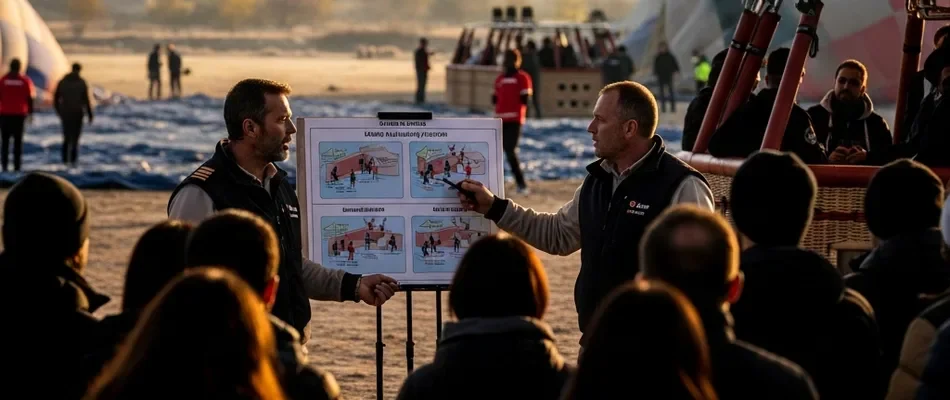
Every flight begins with a safety briefing from the pilot. How to get into the basket, where to hold on during the flight, what position to take on landing, what to do in an emergency — each is explained in turn. Although the briefing lasts only five or ten minutes, it is the most critical part of the flight. The landing position matters most of all: standing in the basket with knees slightly bent and both hands gripping the handles reduces the load on your joints at the moment of firm contact with the ground.
If the briefing is not in your own language, do not hesitate to ask for a translation. Most pilots speak at least one other tour language besides English, and the ground crew can usually communicate in several. The briefing also covers where to put personal items such as phones, cameras and bags. Not skipping these details matters both for comfort and for keeping your hands free to enjoy the view.
Accident Statistics: What Do the Numbers Say?
To speak in numbers: more than six hundred thousand passengers are carried in Cappadocia each year. Against that, the rate of accidents involving death or serious injury is statistically very low — a single case across thousands of flights. Compared with other popular balloon regions worldwide, that rate is similar or better. For context: the rate of urban road accidents in Türkiye is many times higher than the risk density of an hour in a balloon.
Even so, statistics do not mean zero risk. In most of the serious incidents that have occurred, a combination of factors was at work — an unexpected change in the weather, a communication problem with the ground crew, or human error. After every incident the civil aviation authority carries out a detailed investigation, shares its findings with the sector and updates the regulations where necessary. That cycle of learning is what makes the sector safer with each passing year.
How to Choose a Safe Operator
Dozens of licensed balloon companies operate in Cappadocia. There are a few basic criteria to look at when choosing between them. The first is licence verification: the company should be able to give you its operating licence number, either on its official page or over the phone. The second is pilot experience: which pilots will be flying, and how many hours do they average? A passenger has every right to ask. The third is genuine passenger reviews — reading experiences on third-party platforms, not only on the company's own page, gives a fuller picture.
Unusually low prices are a warning sign. There is a floor to Cappadocia balloon flight prices, and it is worth asking how an offer below it is possible. Generally there are either hidden charges, a much shorter flight, or corners cut on safety. Expensive does not always mean safe — but very cheap usually means something has been left out. Mid-range operators with a licence and experienced pilots are generally the soundest choice.
Your Responsibilities as a Passenger
Safety is not one-sided. As a passenger you need to be ready for the flight too. Listening carefully to the briefing, following instructions and taking the landing position correctly are the basic rules. During the flight, an instruction from the pilot — take the bracing position now, for instance — should be followed immediately and without debate. The reflex to reach for a phone at the moment of landing, letting go with one hand, is the most common and most preventable mistake.
Being honest about your health matters as well. Serious heart conditions, advanced pregnancy, surgery within the past month or episodes of high blood pressure should all be declared when booking. The pilot may decide that a particular passenger should not fly that day, and that decision is in the passenger's own interest. Flying under the influence of alcohol is likewise prohibited; in the early hours of the morning, be sure the previous evening is no longer with you.
What Happens in an Emergency?
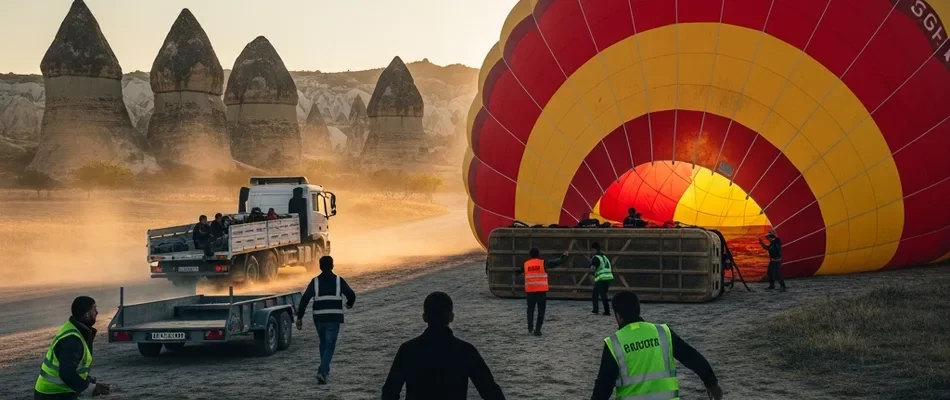
The pilot is in continuous radio contact with the ground crew from the basket. The flight is tracked by GPS, and the balloon's position is monitored live by the support vehicle. If the weather changes unexpectedly or a technical problem arises, the most suitable open area for landing is identified and the balloon is brought down under control. The basket carries a fire extinguisher, a first aid kit, a spare burner igniter and a radio.
Pilots are specifically trained for a rapid descent. In that situation the landing can at times be firmer than usual — but that is precisely what the structure of the basket and the landing position are for: protecting the passenger. Because the ground crew is waiting at the landing area, passengers are helped out of the basket quickly and medical assistance provided if needed. This whole chain, from equipment to crew, is a system tested over many years.
After the Flight: The Rest of the Morning
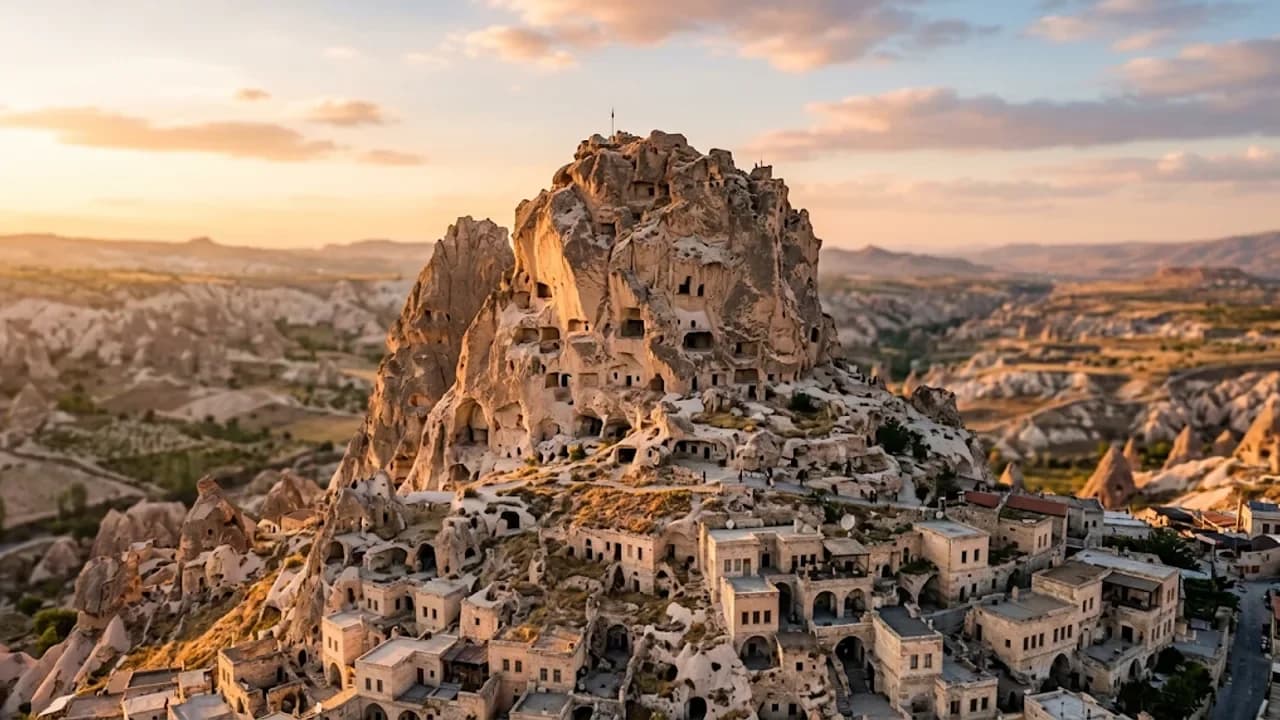
Once the balloon has landed it is still early. Many visitors plan a traditional breakfast or a hot coffee at this point. After the adrenaline of the flight, a generous breakfast at a place looking out over the summit of Uçhisar or the valleys of Göreme completes the experience. KMU Mehmet Usta, at the summit of Uçhisar, close to the balloon landing areas and serving a traditional Turkish breakfast spread, can be a natural part of that morning.
The most honest answer to whether a Cappadocia balloon flight is safe is this: with all its layers of oversight, its licensed pilots and its inspected equipment, this is one of the safest balloon experiences in the world. Zero risk does not exist in any area of life, but in Cappadocia that risk is statistically very low. A passenger who chooses an operator carefully, listens to the briefing and follows instructions can enjoy that singular sunrise panorama with an easy mind.